In this article
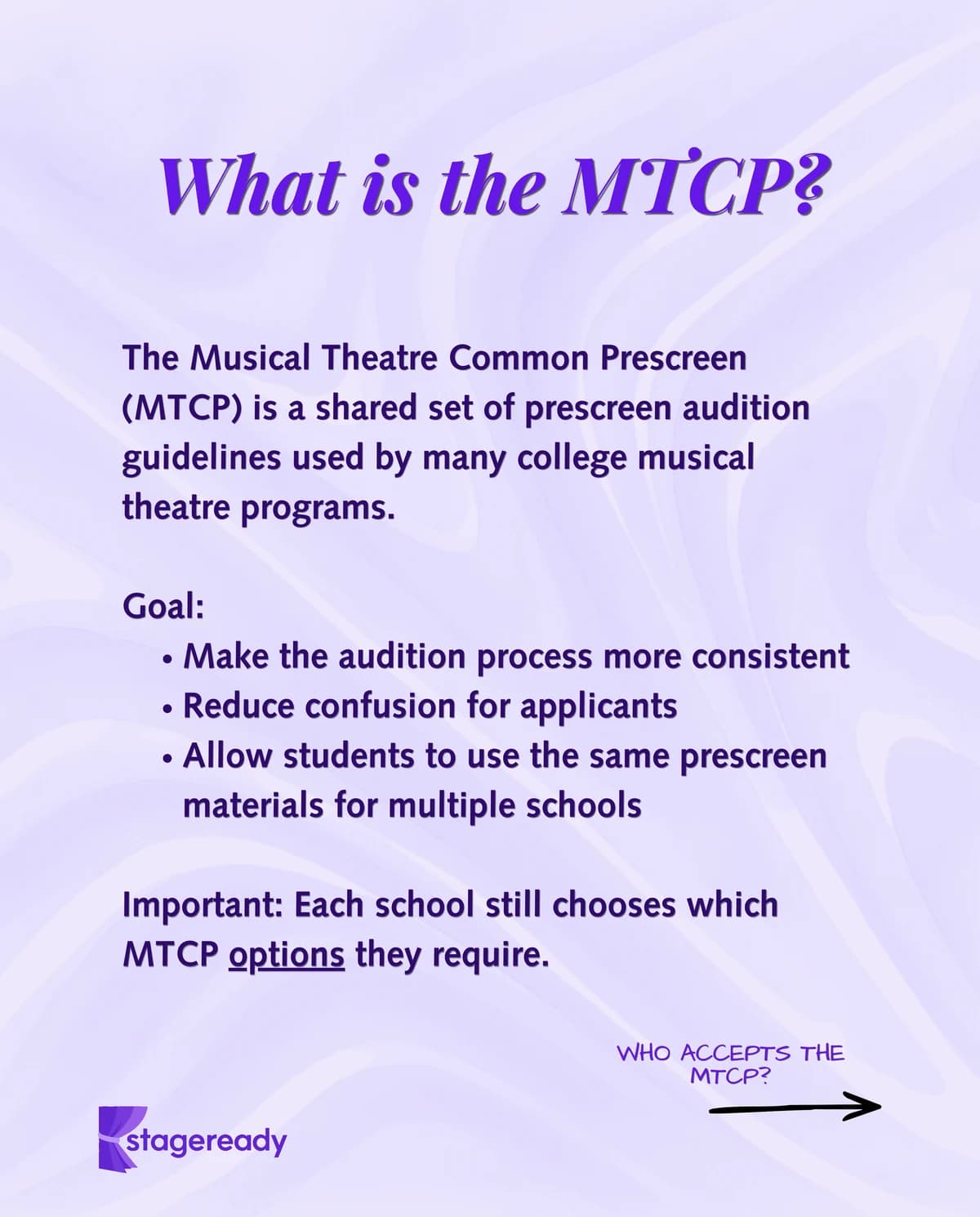
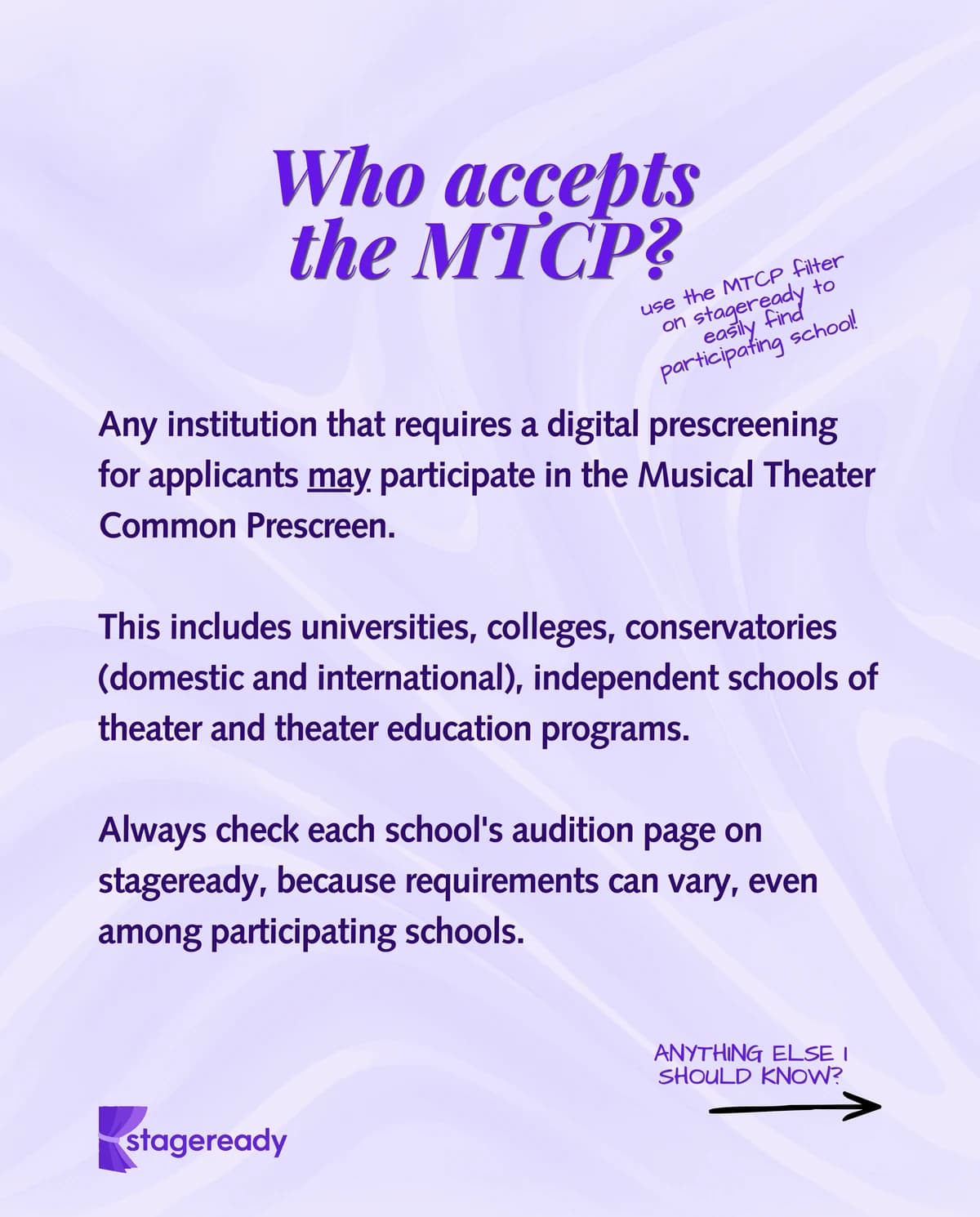
The Musical Theater Common Prescreen (MTCP) is a shared set of criteria for musical theater prescreen videos. Participating institutions choose from standard options for songs, monologues, dance, ballet, slating, and wildcard videos, which lets applicants reuse well-planned material across more than one application.
The MTCP is not a centralized submission platform. Each school receives media through its own application process and decides which MTCP options it wants. Use this 2026 to 2027 guide to understand the common criteria, then confirm the exact combination and any additional questions or materials on every program's stageready page and linked official source.


Filming, framing, and labeling
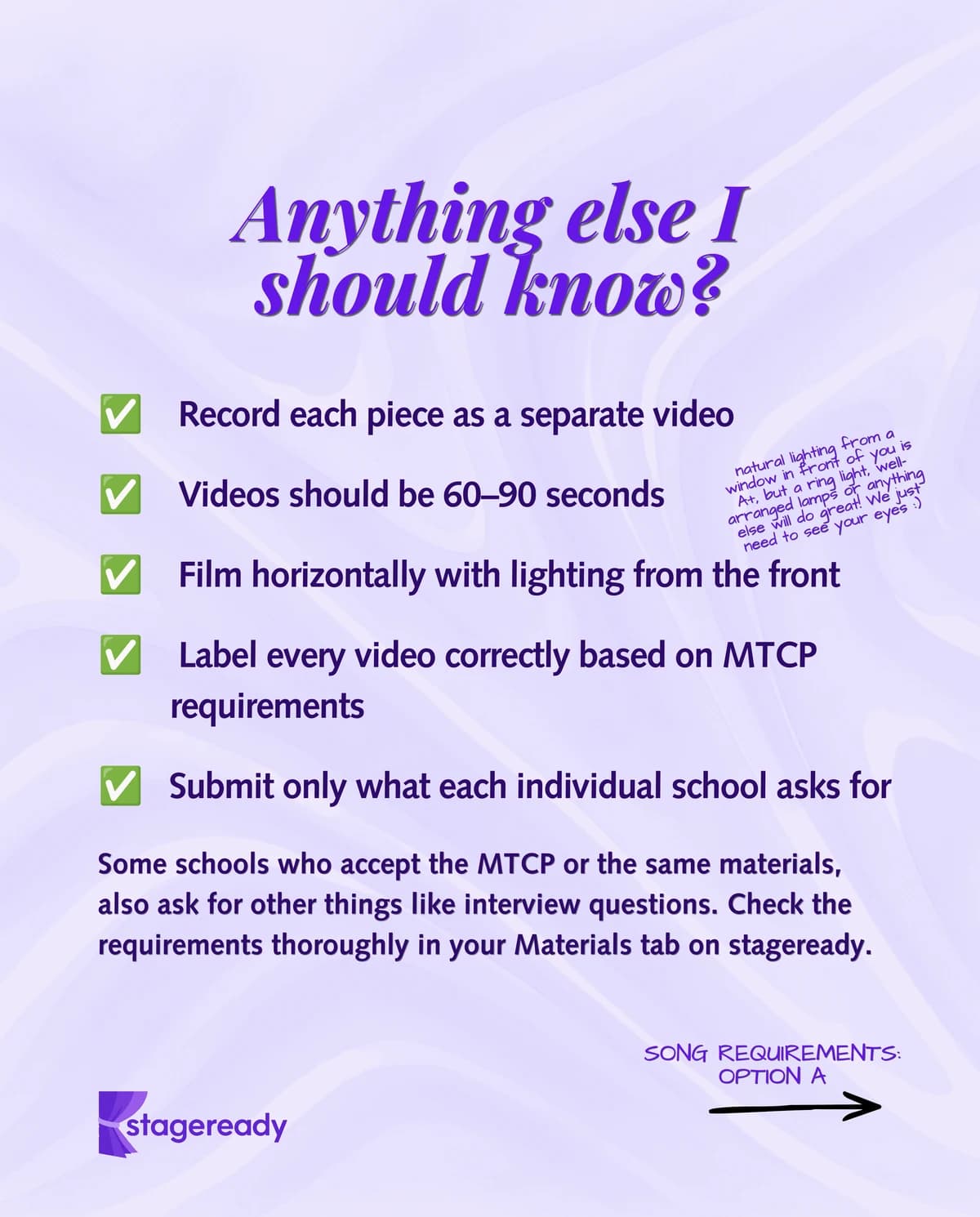
Record and upload each piece as a separate media file. The MTCP recommends that each song, monologue, dance, ballet, and wildcard video run between 60 and 90 seconds. Film horizontally with the camera at eye level, light your face from the front or side, and use a background that does not distract from the performance.
- Slate: Record one introduction video stating your name. Pronouns are optional. Keep the slate to 10 seconds or less, and do not repeat it at the start of every performance video.
- Songs and monologues: Use a waist-up frame so the reviewers can see your face clearly.
- Dance and ballet: Keep your full body, including your feet, visible for the entire video.
- Labels: Include the piece, show or writer, and your first and last name. Examples include Song Title - Musical - First Last and Play Title - Playwright - First Last.
Submit only the categories and options the individual school requests. A participating school may still ask for an interview response, supplemental video, or another program-specific item.
Song options
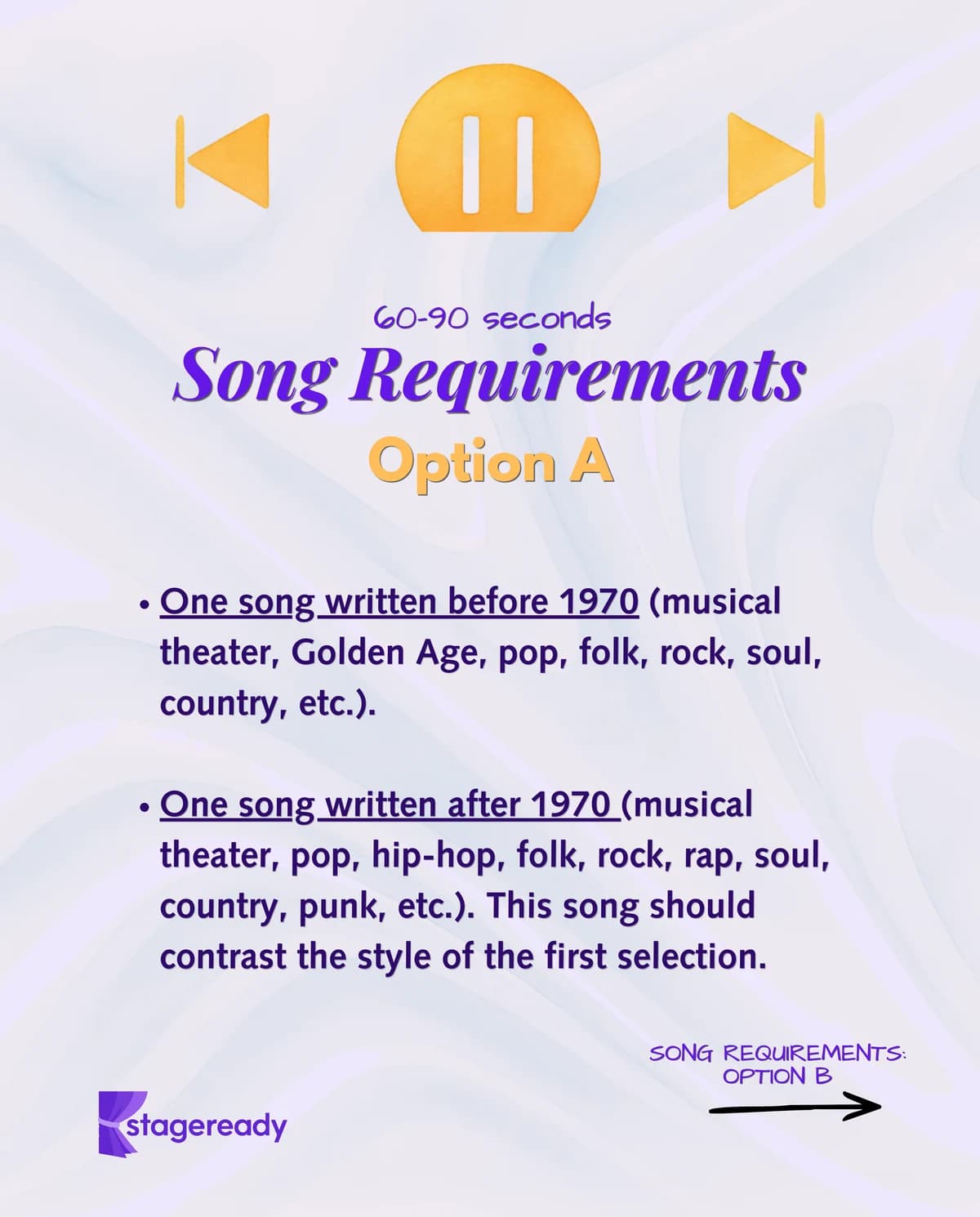
- Option A: One song written before 1970 and one song written after 1970. The second selection should contrast the style of the first. Either song may come from musical theater or another listed style.
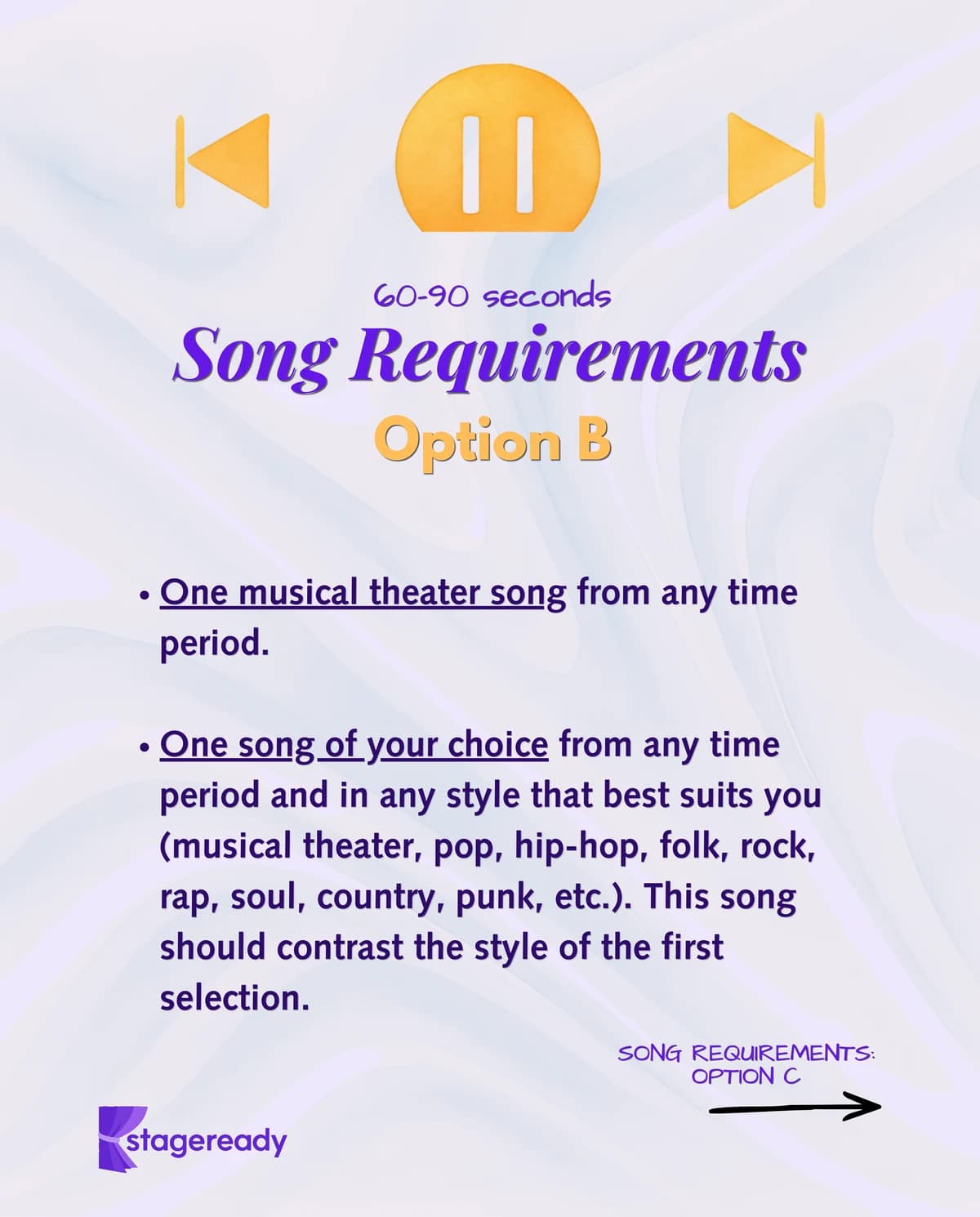
- Option B: One musical theater song from any time period, plus one contrasting song from any time period and in any style that suits you.
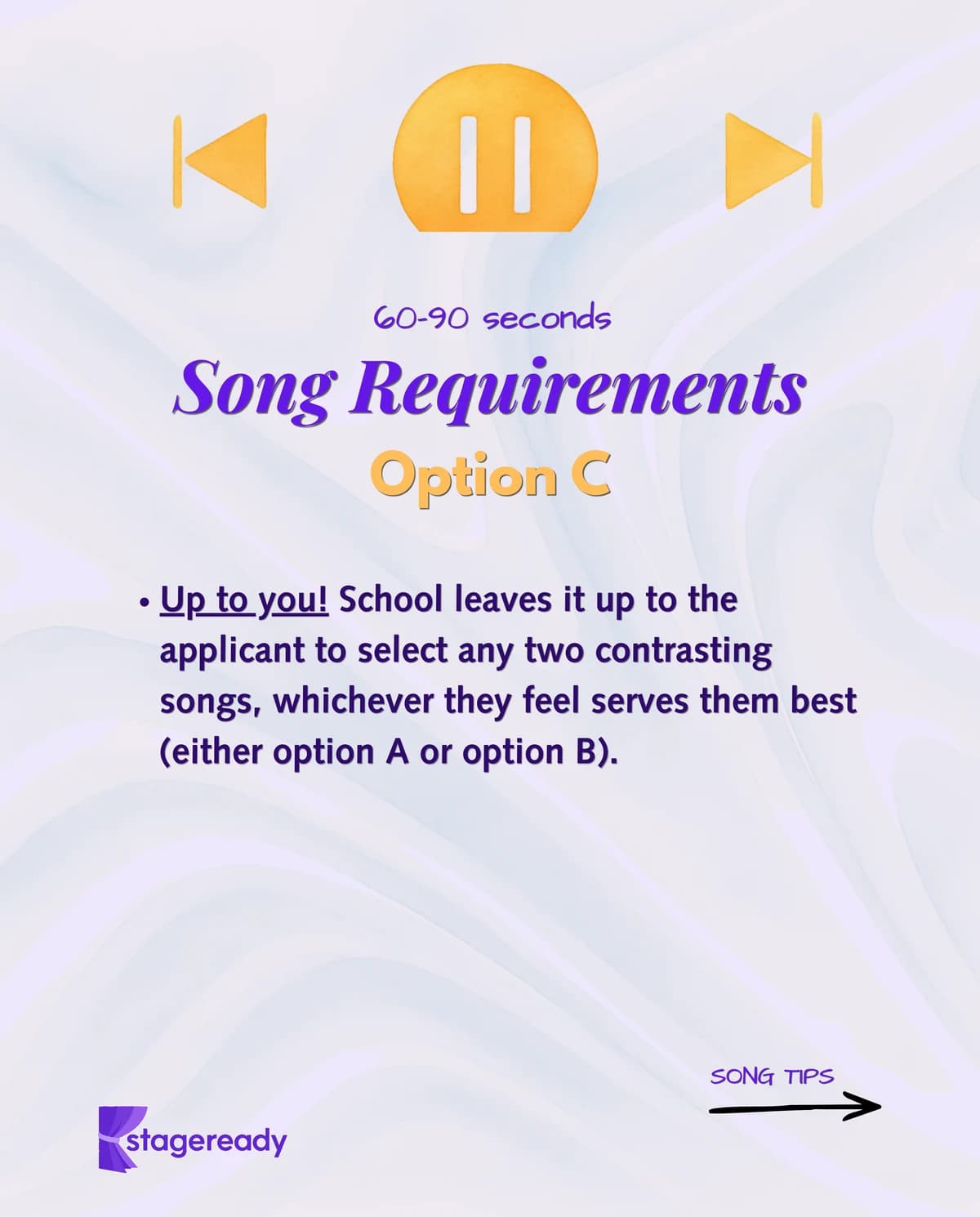
- Option C: The applicant chooses either Option A or Option B.
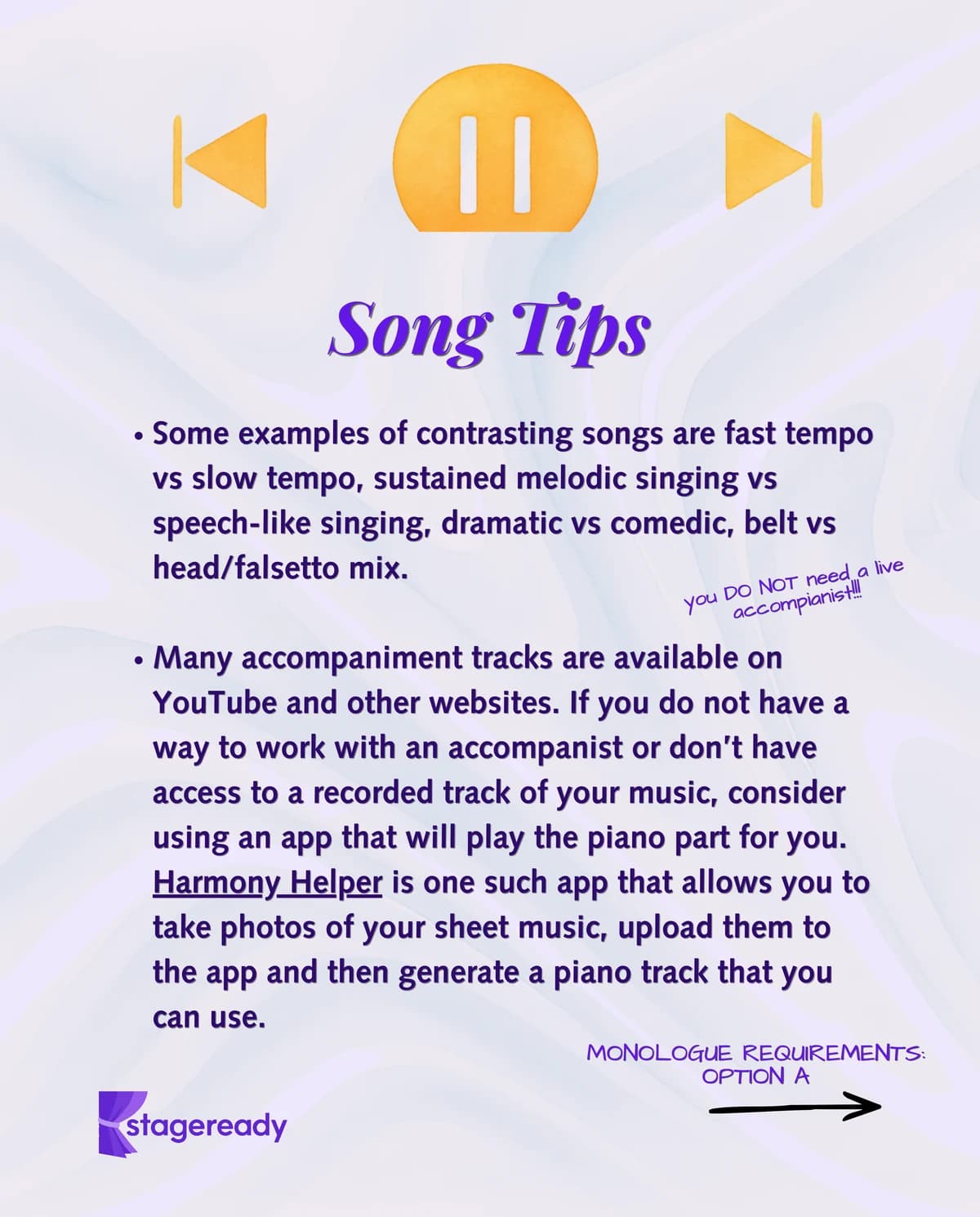
Contrast can come from tempo, vocal quality, tone, storytelling, or style. A fast and slow pair, dramatic and comedic pair, or sustained and speech-like pair can all create contrast. A live accompanist is not required, so a clear recorded accompaniment track is acceptable.
Monologue options
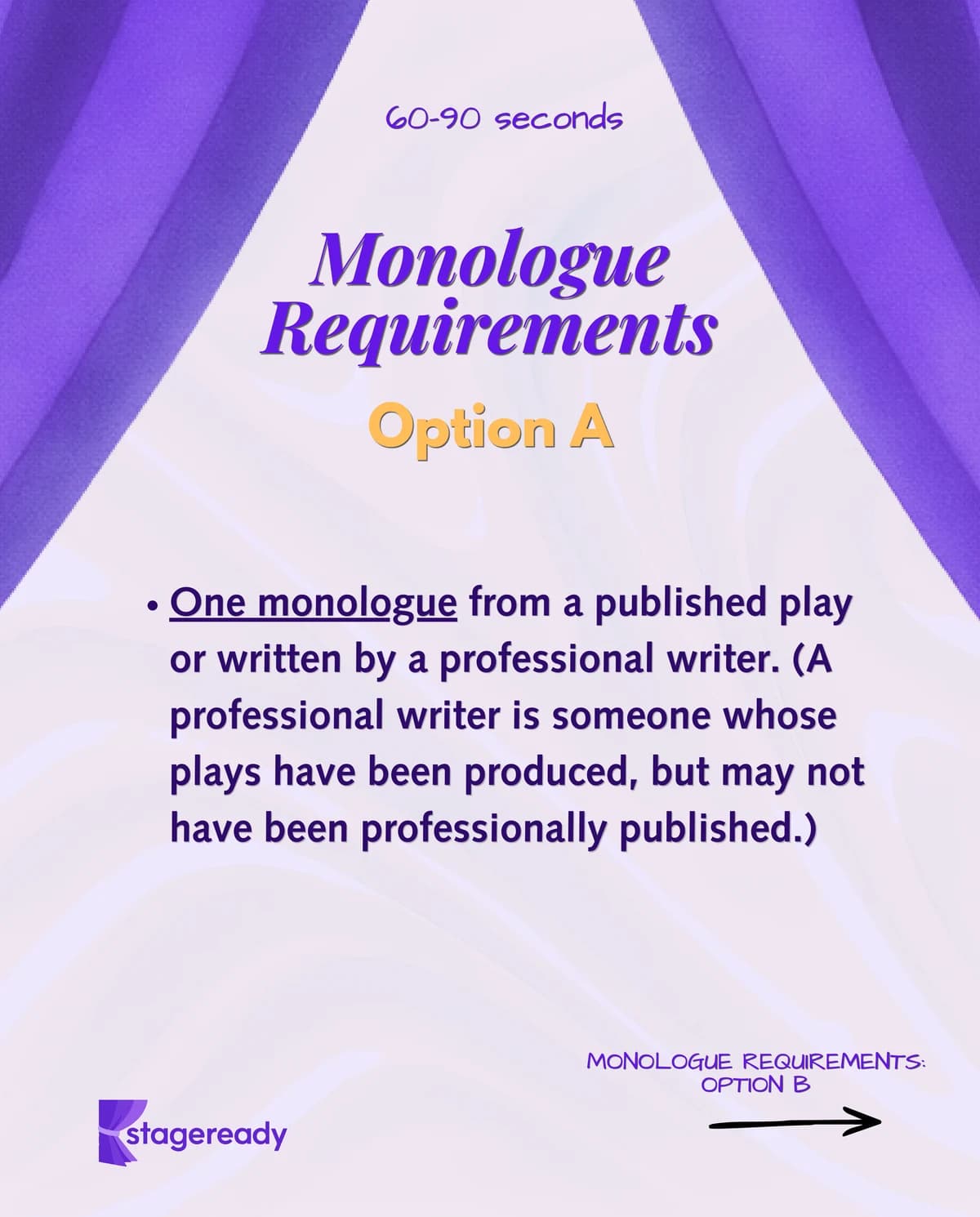
- Option A: One monologue from a published play or written by a professional writer whose work has been produced.
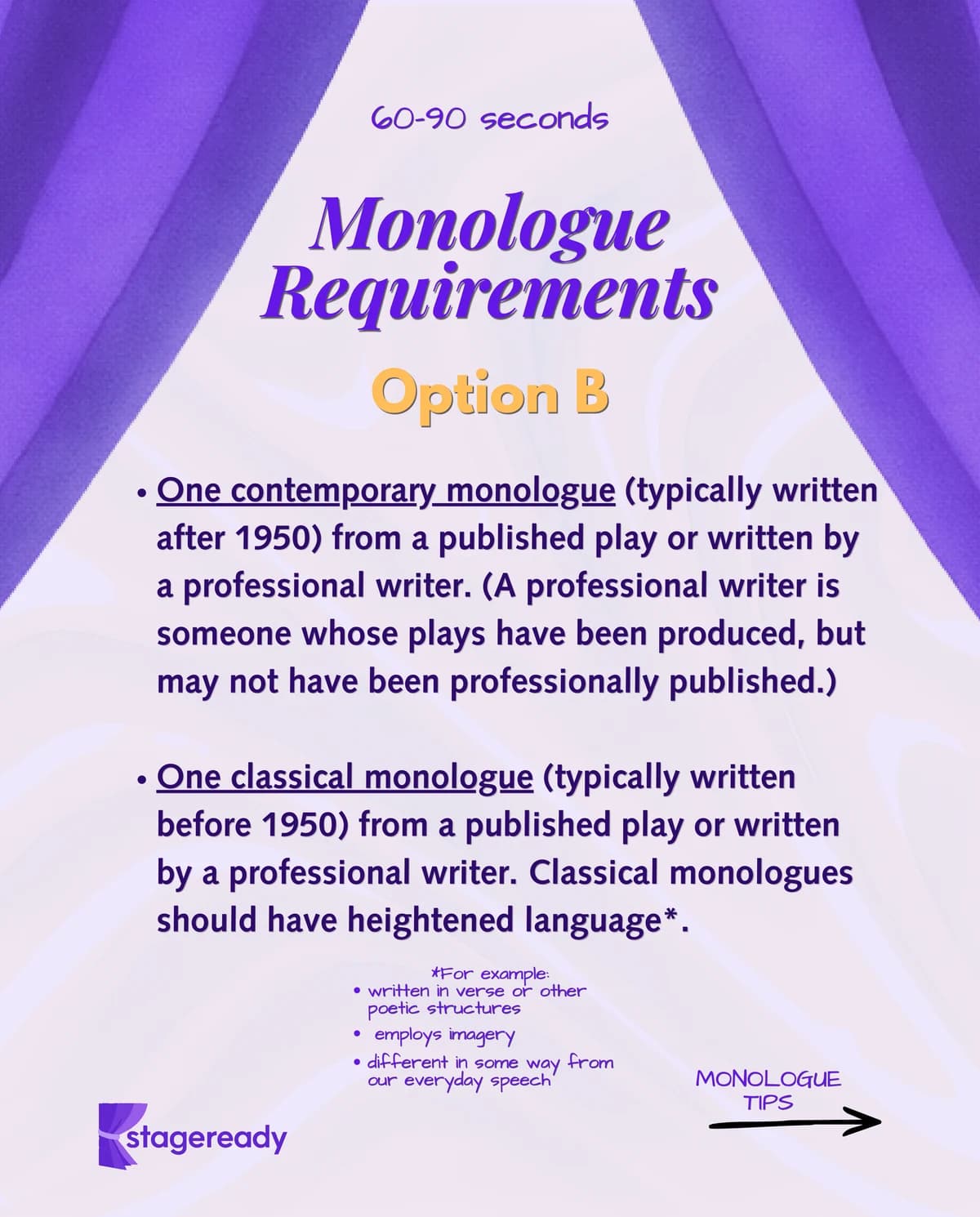
- Option B: One contemporary monologue, typically written after 1950, and one classical monologue, typically written before 1950. Both must come from a published play or professional writer. The classical selection should use heightened language.
- Option C: No monologue required.
Read the entire play, choose an age-appropriate character, and work on material that connects to your own experience. Heightened language may use verse, poetic structure, imagery, or speech patterns that differ from everyday conversation.
Dance, ballet, and wildcard options
Dance
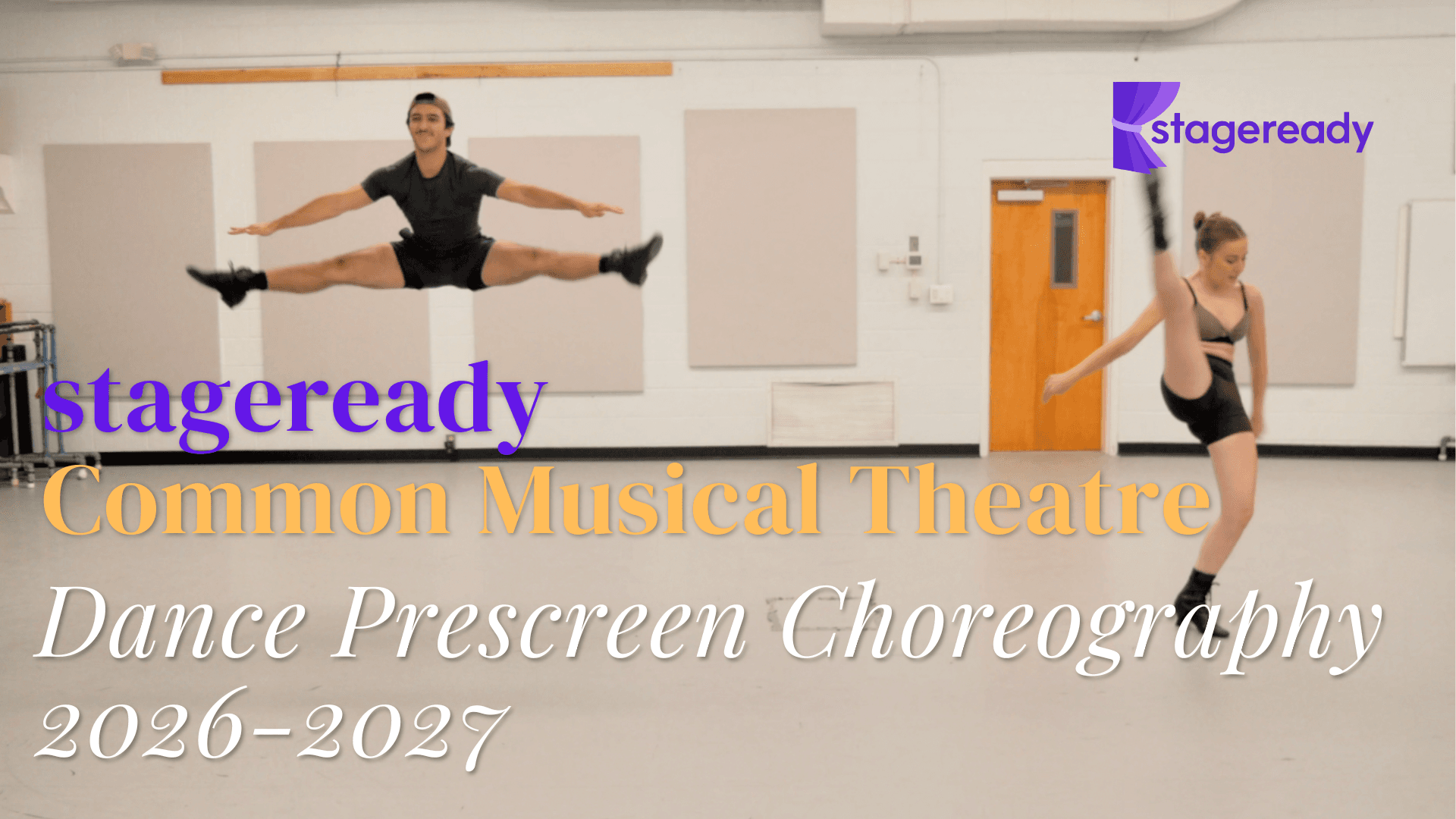
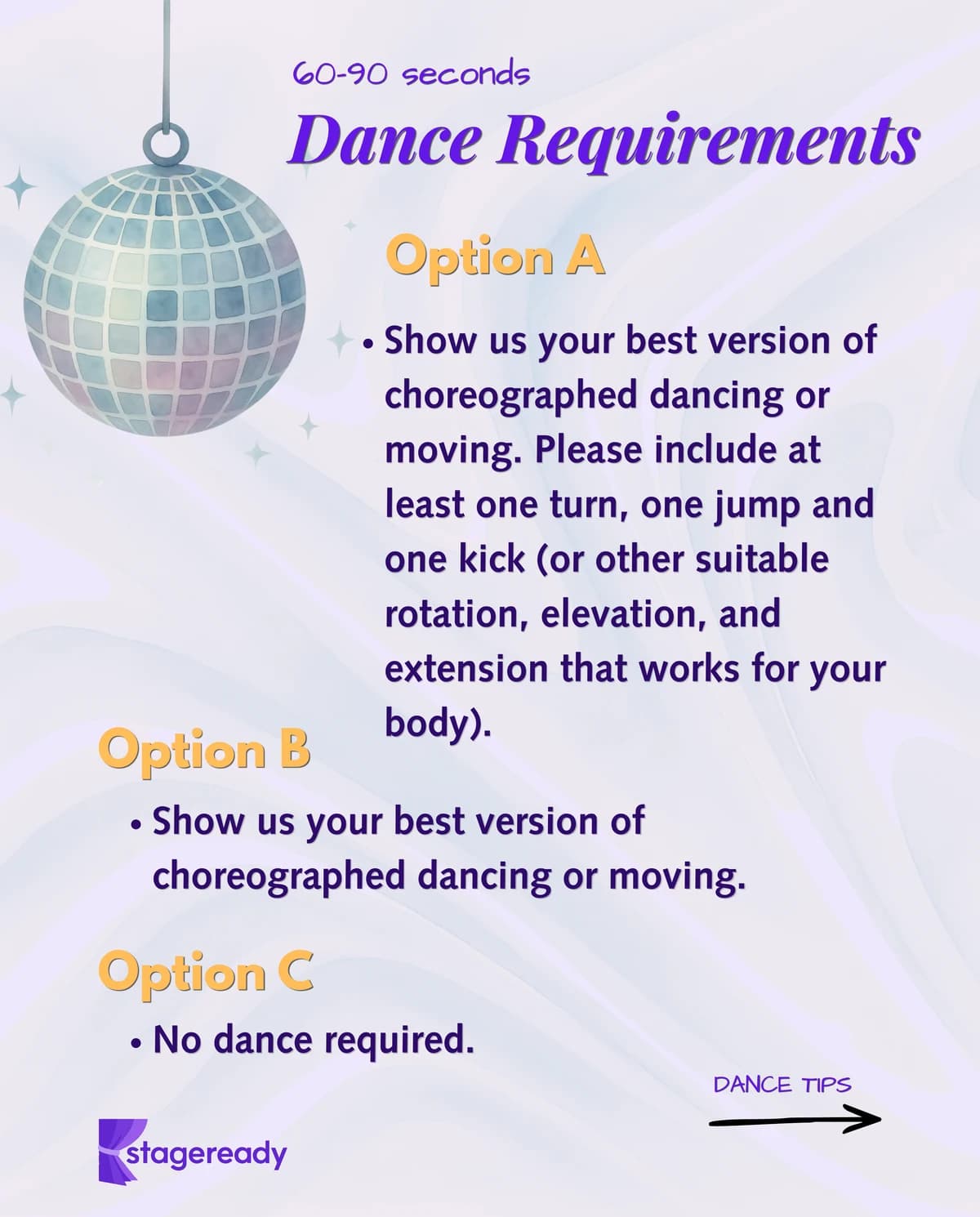
- Option A: Show your best choreographed dancing or movement and include at least one turn, one jump, and one kick, or another suitable rotation, elevation, and extension that works for your body.
- Option B: Show your best choreographed dancing or movement without the specific technical checklist from Option A.
- Option C: No dance required.
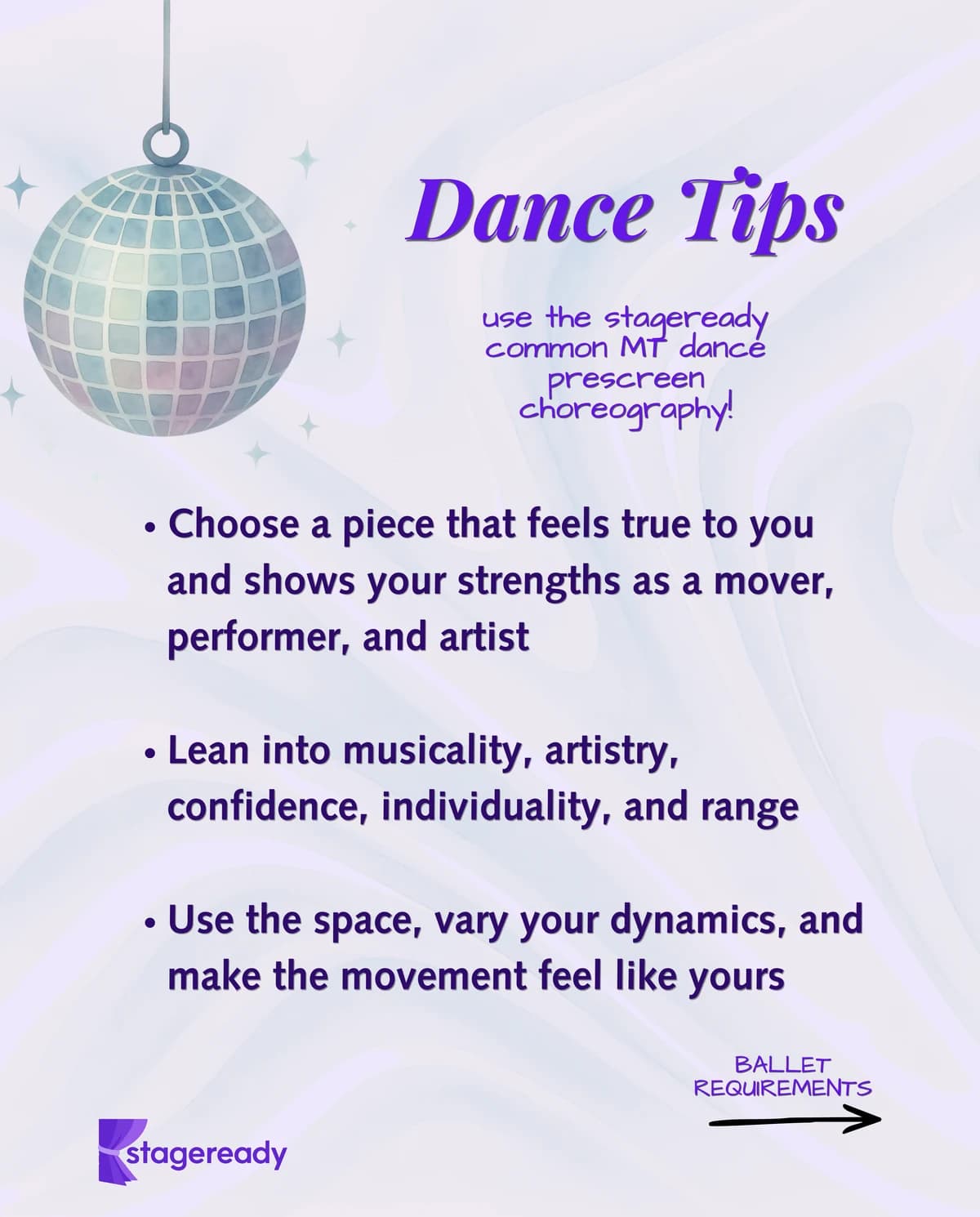
Choose choreography you can execute safely and confidently. Use the space, vary the dynamics, and let the movement show your musicality, artistry, individuality, and range.
Ballet
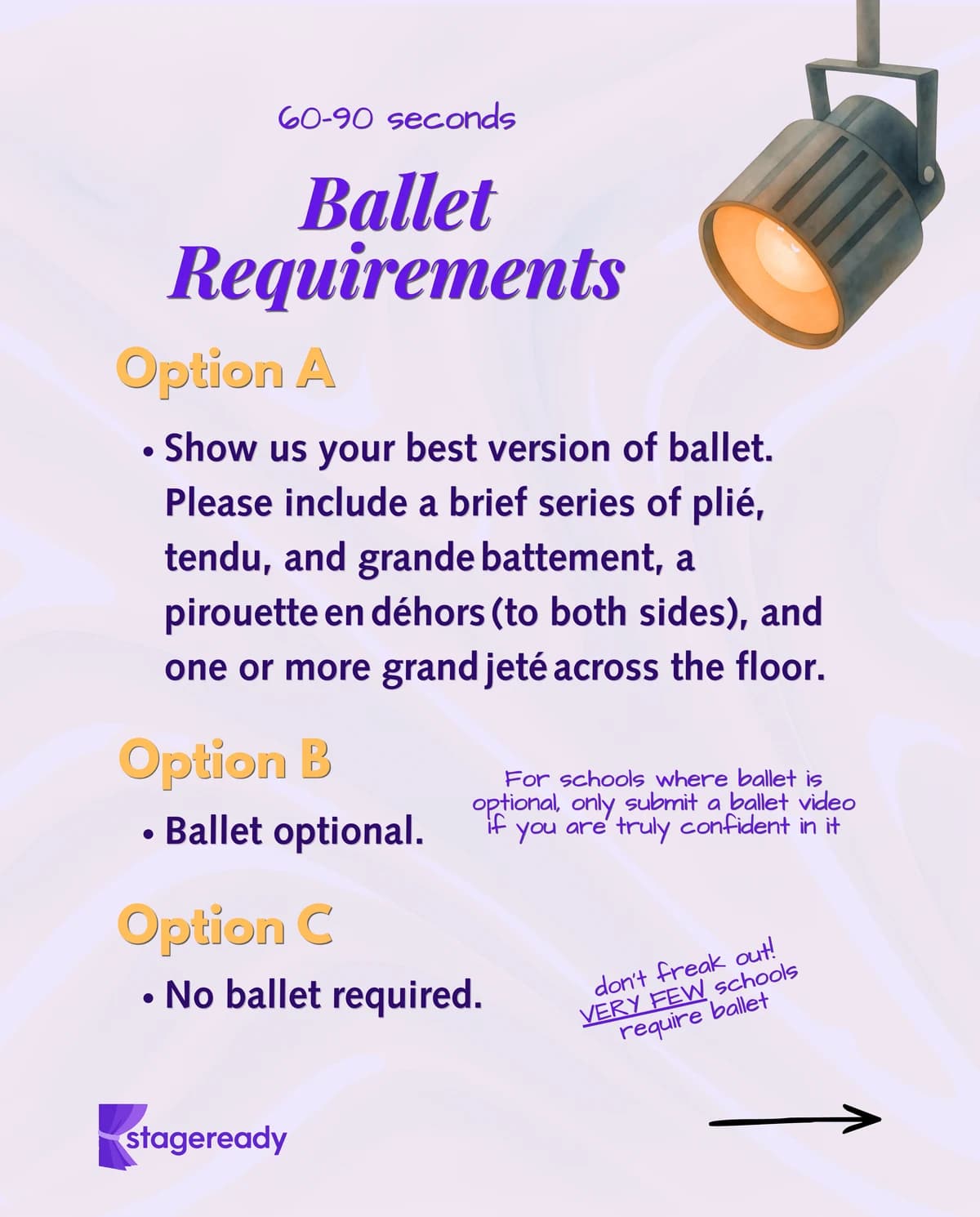
- Option A: Include a brief series of plié, tendu, and grande battement, a pirouette en dehors to both sides, and one or more grand jeté across the floor.
- Option B: Ballet is optional.
- Option C: No ballet required.
Wildcard
The optional wildcard is a chance to share something the artistic materials do not show: a special skill, an instrument, a hobby, an original piece, or a meaningful story. If a school accepts one, our wildcard guide includes real submissions and more ideas.
Schools that accept the MTCP
The live table below lists musical theater programs in the stageready database that use MTCP criteria, along with the song, monologue, dance, and ballet options recorded for each program. Schools can choose different options and can change them between application cycles. Open the program page and confirm its linked official source before filming or submitting.
| School | Program | Song | Monologue | Dance | Ballet |
|---|---|---|---|---|---|
| Abilene Christian University (TX) | BFA Theatre — Musical Theatre | A | A | — | — |
| Auburn University (AL) | BFA Music Theatre | B | A | A | B |
| Austin Peay State University (TN) | BFA Theatre Arts — Musical Theatre | C | B | A | B |
| Boston Conservatory at Berklee (MA) | BFA Theater: Musical Theater | A | A | — | — |
| Campbellsville University (KY) | BFA Musical Theatre | A | A | B | C |
| Carthage College (WI) | BA Music: Musical Theatre | C | A | — | C |
| Carthage College (WI) | BM Musical Theatre | C | A | — | C |
| Central Washington University (WA) | BFA Musical Theatre | C | A | B | C |
| Circle in the Square Theatre School (NY) | BFA Musical Theatre | A | B | — | — |
| Coastal Carolina University (SC) | BFA Theatre Arts — Musical Theatre | B | A | A | B |
| Cornish College of the Arts (WA) | BFA Musical Theater | A | A | A | B |
| East Carolina University (NC) | BFA Theatre Arts — Musical Theatre | B | B | B | B |
| Eckerd College (FL) | BFA Musical Theatre | A | B | — | — |
| Elon University (NC) | BFA Music Theatre | C | A | A | C |
| Emerson College (MA) | BFA Musical Theatre | A | A | A | C |
| Emory & Henry University (VA) | BFA Musical Theatre | B | A | A | — |
| Florida Atlantic University (FL) | BFA Musical Theatre | C | B | B | B |
| Florida International University (FL) | BFA Musical Theatre | A | A | A | B |
| Florida Southern College (FL) | BFA Musical Theatre | B | A | B | — |
| Illinois Wesleyan University (IL) | BFA Music Theatre | A | A | A | C |
| Indiana University - Bloomington (IN) | BFA Musical Theatre | A | A | A | — |
| Indiana University - South Bend (IN) | BFA Theatre — Musical Theatre Performance | A | A | — | — |
| James Madison University (VA) | BA Musical Theatre | C | A | A | — |
| Manhattan School of Music (NY) | BM Musical Theatre | A | A | A | C |
| Millikin University (IL) | BFA Musical Theatre | A | A | A | A |
| Missouri Baptist University (MO) | BFA Musical Theatre | A | A | B | — |
| Missouri State University (MO) | BFA Musical Theatre | C | A | B | C |
| Molloy University / CAP21 (NY) | BFA Musical Theatre | A | A | A | B |
| Montclair State University (NJ) | BFA Musical Theatre | B | A | B | C |
| Nazareth University (NY) | BFA Musical Theatre | C | A | A | B |
| New World School of the Arts (FL) | BFA Theatre Performance — Musical Theatre | B | B | B | B |
| Northern Michigan University (MI) | BFA Musical Theatre | A | A | A | B |
| Oakland University (MI) | BFA Musical Theatre | A | A | A | A |
| Oberlin College & Conservatory (OH) | BM Music Theater | B | A | B | C |
| Ohio Northern University (OH) | BFA Musical Theatre | C | A | B | B |
| Oklahoma State University (OK) | BFA Musical Theatre | C | A | A | B |
| Otterbein University (OH) | BFA Musical Theatre | A | B | A | A |
| Point Park University (PA) | BFA Musical Theatre | A | B | C | C |
| Purdue University - Fort Wayne (IN) | BFA Theatre — Musical Theatre | B | A | — | — |
| Rider University (NJ) | BFA Musical Theatre | C | A | B | B |
| Roosevelt University / CCPA (IL) | BFA Musical Theatre | A | A | A | C |
| Russell Sage College (NY) | BS Musical Theatre | B | A | B | B |
| San Diego State University (CA) | BA Musical Theatre | B | A | — | — |
| Seattle University (WA) | BFA Musical Theater | B | A | A | B |
| Shenandoah Conservatory (VA) | BFA Musical Theatre | C | A | B | B |
| Slippery Rock University (PA) | BFA Acting — Musical Theatre | C | A | C | C |
| Southeast Missouri State University (MO) | BFA Musical Theatre | A | A | A | C |
| Stephens College (MO) | BFA Musical Theatre | C | A | A | B |
| SUNY Binghamton (NY) | BFA Musical Theatre | B | A | C | C |
| SUNY Fredonia (NY) | BFA Musical Theatre | C | A | B | B |
| Syracuse University (NY) | BFA Musical Theater | B | A | A | B |
| Temple University (PA) | BFA Musical Theater | A | A | A | B |
| Texas Christian University (TX) | BFA Theatre — Musical Theatre | B | A | B | B |
| Texas State University (TX) | BFA Musical Theatre | B | A | A | B |
| Texas Tech University (TX) | BFA Theatre Arts — Musical Theatre | B | B | A | C |
| The University of Texas - Arlington (TX) | BFA Theatre Arts — Musical Theatre | A | A | B | — |
| University at Buffalo (NY) | BFA Music Theatre | C | A | A | B |
| University of Alabama (AL) | BFA Theatre — Musical Theatre | C | A | A | B |
| University of Alabama - Birmingham (AL) | BFA Musical Theatre | C | A | B | B |
| University of Central Florida (FL) | BFA Theatre — Musical Theatre | B | A | B | B |
| University of Florida (FL) | BFA Theatre Performance — Musical Theatre | C | A | A | — |
| University of Hartford (CT) | BFA Music Theatre | A | A | A | B |
| University of Nevada, Reno (NV) | BA Musical Theatre | A | A | A | — |
| University of New Hampshire (NH) | BA Theatre — Musical Theatre | A | A | B | B |
| University of North Carolina - Greensboro (NC) | BFA Drama — Musical Theatre | A | A | A | B |
| University of Oklahoma (OK) | BFA Musical Theatre | A | A | A | C |
| University of Utah (UT) | BFA Musical Theatre | C | A | B | B |
| Valdosta State University (GA) | BFA Theatre — Musical Theatre | A | B | B | A |
| Virginia Commonwealth University (VA) | BFA Theatre — Musical Theatre | — | — | — | — |
| Viterbo University (WI) | BFA Musical Theatre | C | A | B | B |
| Western Connecticut State University (CT) | BFA Musical Theatre | A | A | A | — |
| Wright State University (OH) | BFA Acting — Musical Theatre | A | A | A | B |
MTCP participation and options come from verified program requirements in stageready. Confirm each linked official source before submitting because schools may change options between application cycles.
Build your MTCP filming list
Start with the school-by-school option grid, then build the shortest shot list that covers the exact combinations on your list.
- Songs: Options A and B overlap, but they are not automatically interchangeable. Option A allows non-musical-theater songs. If your list contains both A and B schools, a contrasting pre-1970 and post-1970 pair with at least one qualifying musical theater song can cover both definitions.
- Monologues: An Option B contemporary and classical pair can also provide the single selection for an Option A school, as long as both pieces meet the published-play or professional-writer rule.
- Dance: If you can execute the required elements safely, an Option A video also meets the more open description in Option B. Submit it only where requested.
- Ballet: Film the Option A sequence if a school requires it. For an Option B school, submit ballet only if it strengthens your application.
- Wildcard: Prepare one if the schools on your list accept it and you have something specific you want the faculty to know.
After filming, check every portal against your grid. File names, supplemental questions, deadlines, and upload instructions can still differ even when two programs use the same MTCP option.
Musical Theater Common Prescreen FAQs
What is the Musical Theater Common Prescreen?
It is an agreed set of criteria for musical theater prescreen videos. Participating programs select standard options for the material they want, which can reduce duplicate filming for applicants.
Do I submit the MTCP once through Acceptd?
No. The MTCP is not a centralized application or submission platform. Each institution receives applications and media through its own process, which may use Acceptd, another portal, or a school system.
Do all MTCP schools require the same material?
No. Each school chooses an option in each category and may add program-specific questions or materials. Compare the table above, then confirm every program page and official source.
Does the MTCP replace the live audition?
No. The common criteria apply to recorded screening material. A school can use different requirements for its live or virtual callback.
Which schools accept the MTCP?
The live table above lists programs marked as using MTCP criteria in stageready and shows their recorded option choices. Participation is cycle-specific, so confirm the linked school source before submitting.
What if a school does not use the MTCP?
Use that program's own prescreen instructions. Your MTCP pieces may still provide a useful starting point, but timing, framing, repertoire, slating, and supplemental requirements can differ.
Ready to compare your list? Browse programs that accept MTCP, then open each program to review its complete prescreen requirements, deadlines, and official sources.
Ready to find your perfect program?
Explore 10850+ performing arts programs, track audition deadlines, and organize your college search.
Get Started Free