College audition events can save time and travel money, but they are not one single thing. This guide compares National Unified Auditions, independent audition events, nonprofit conferences, and regional college audition days so you can decide what actually belongs on your audition calendar.
How to use college audition events strategically
What college audition events are, and what they are not
At a high level, college audition events are a way for students to audition for multiple college theatre programs in one place, over a compressed period. That is the core benefit: fewer separate trips, more faculty conversations, and a faster way to compare programs.
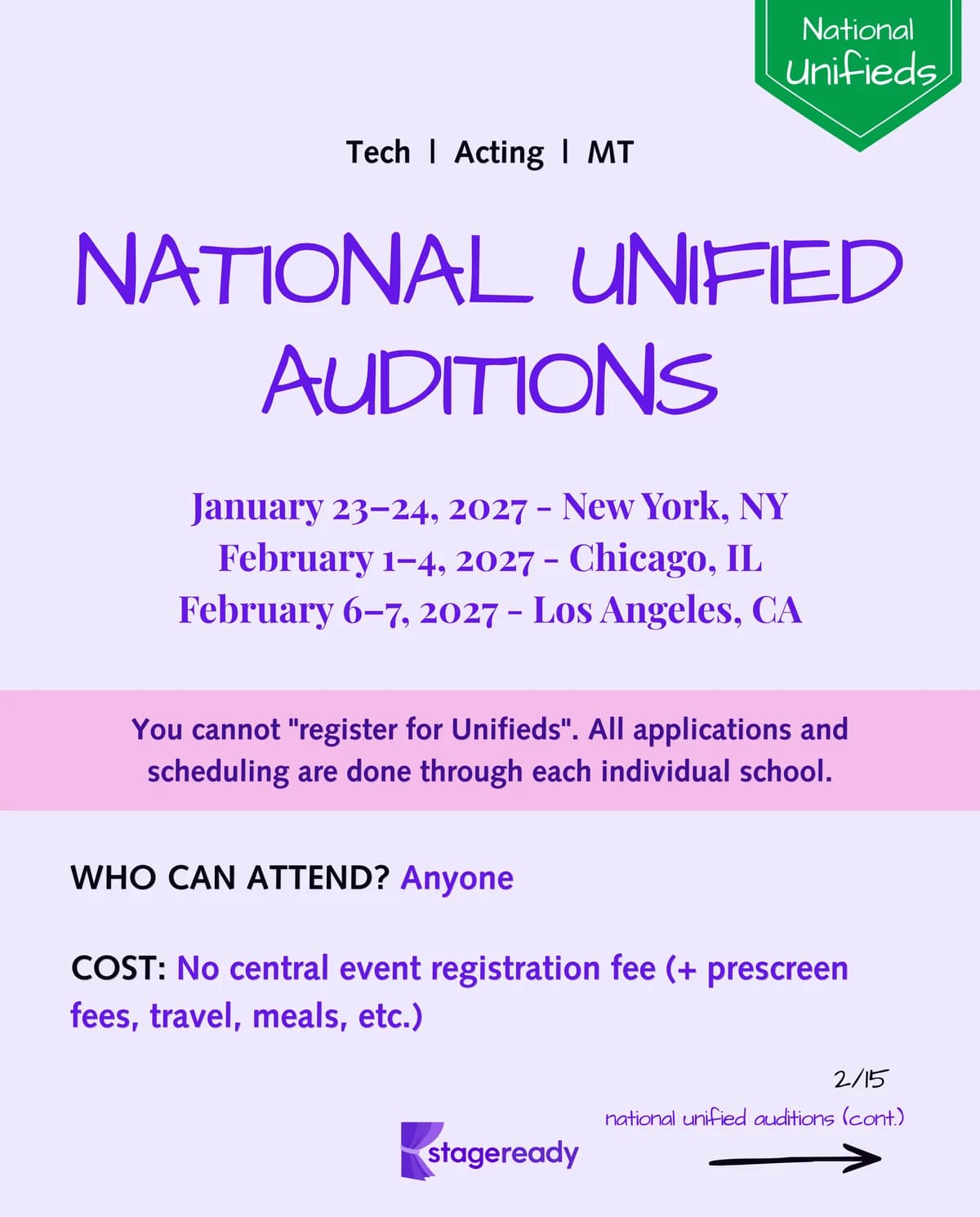
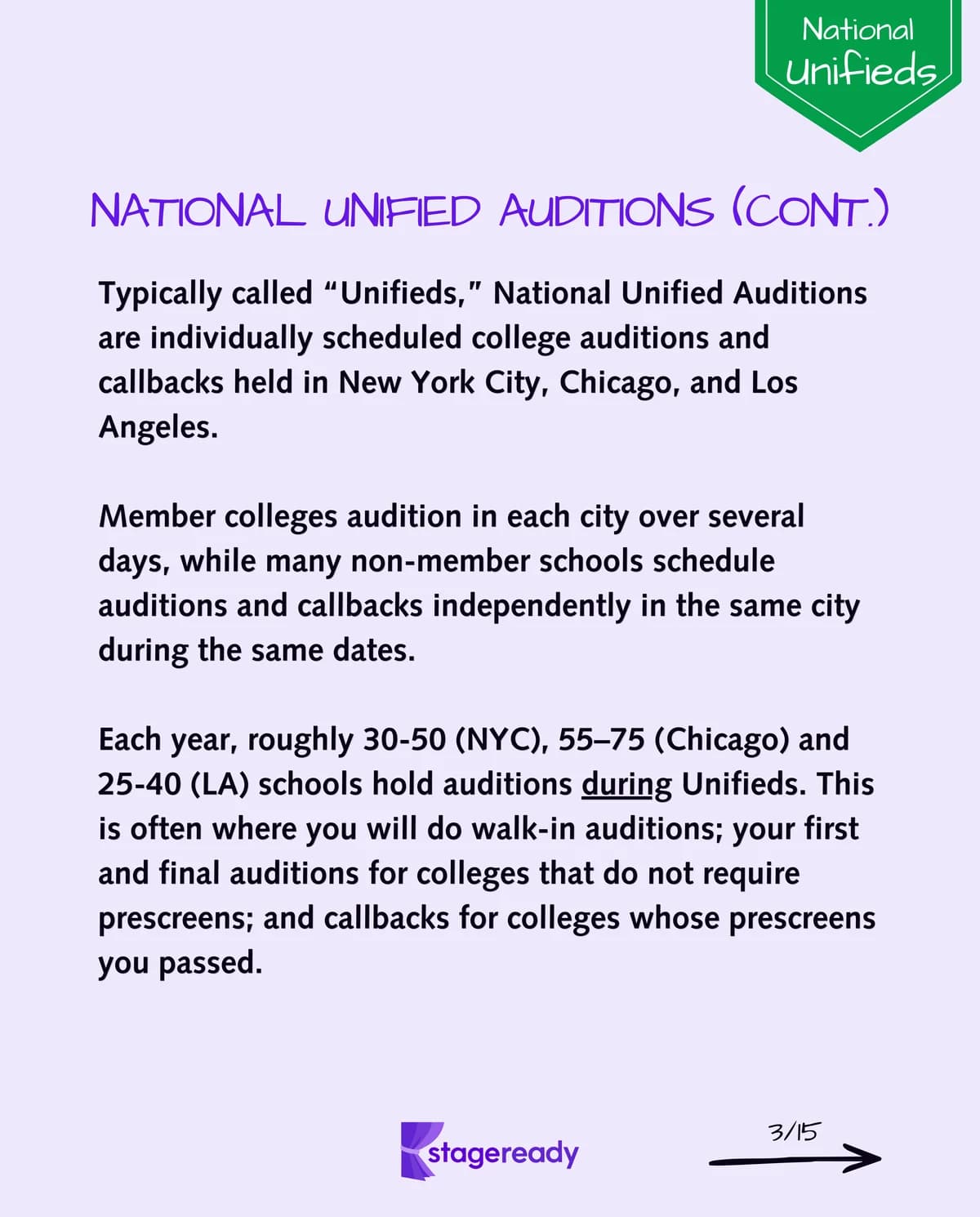
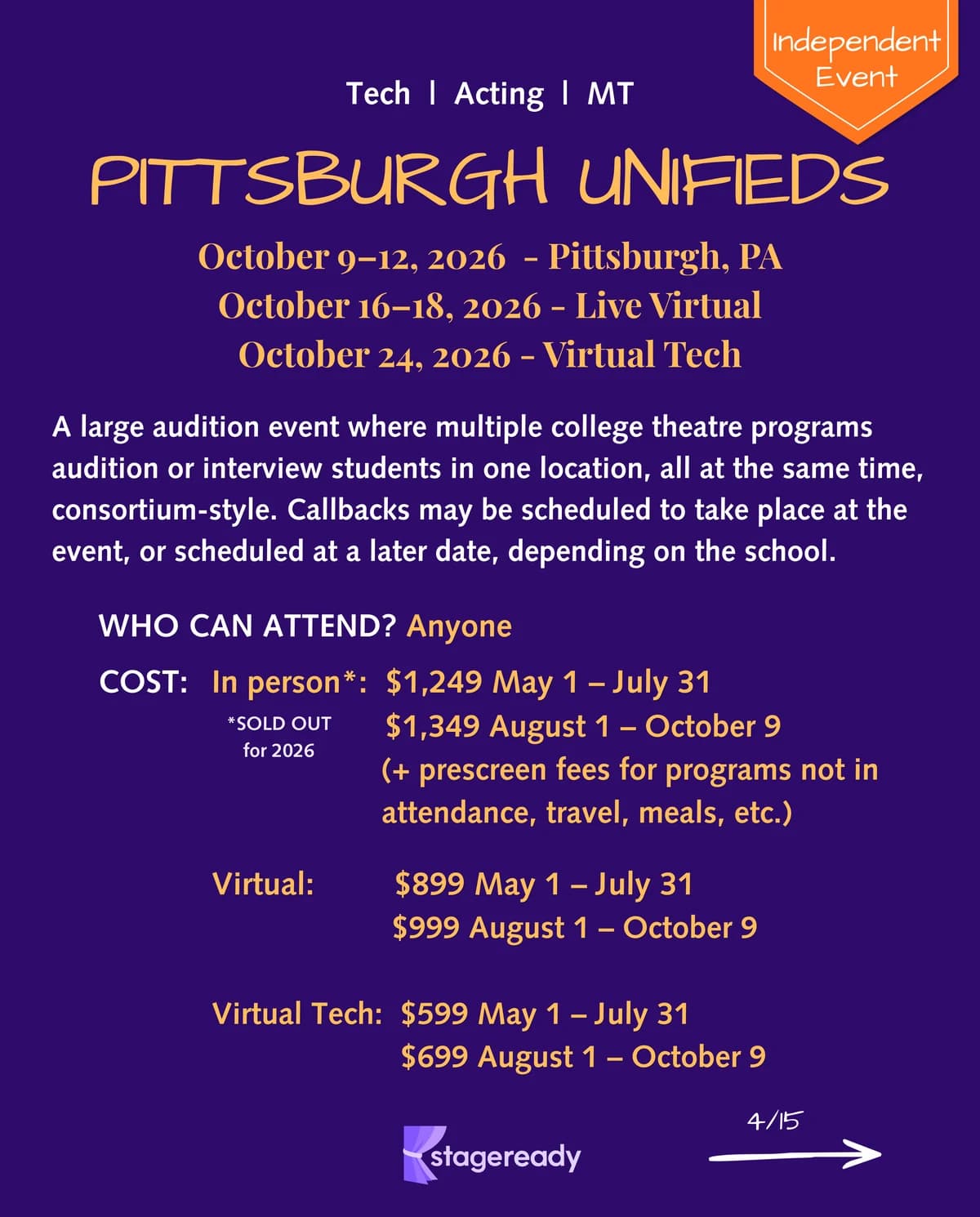
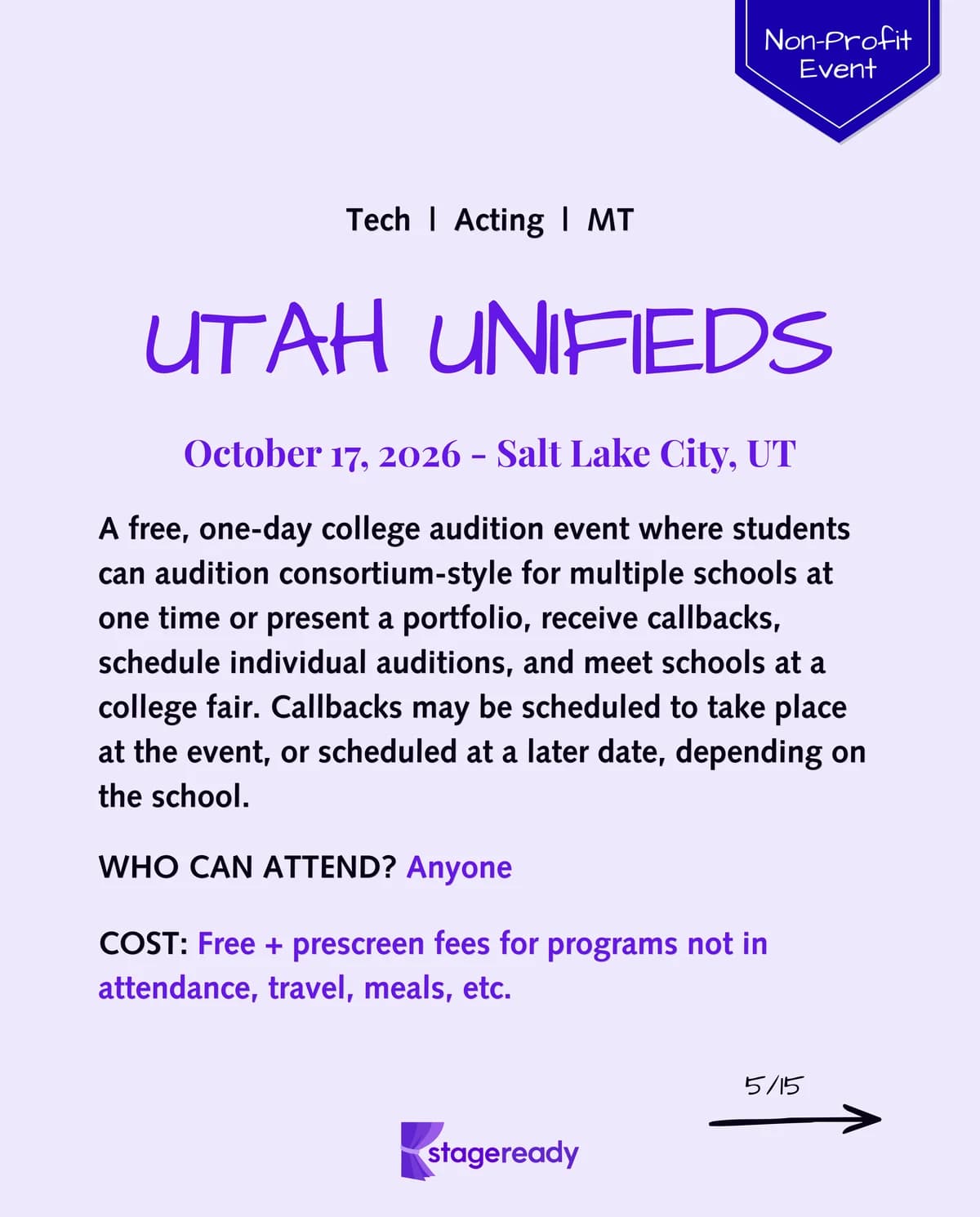
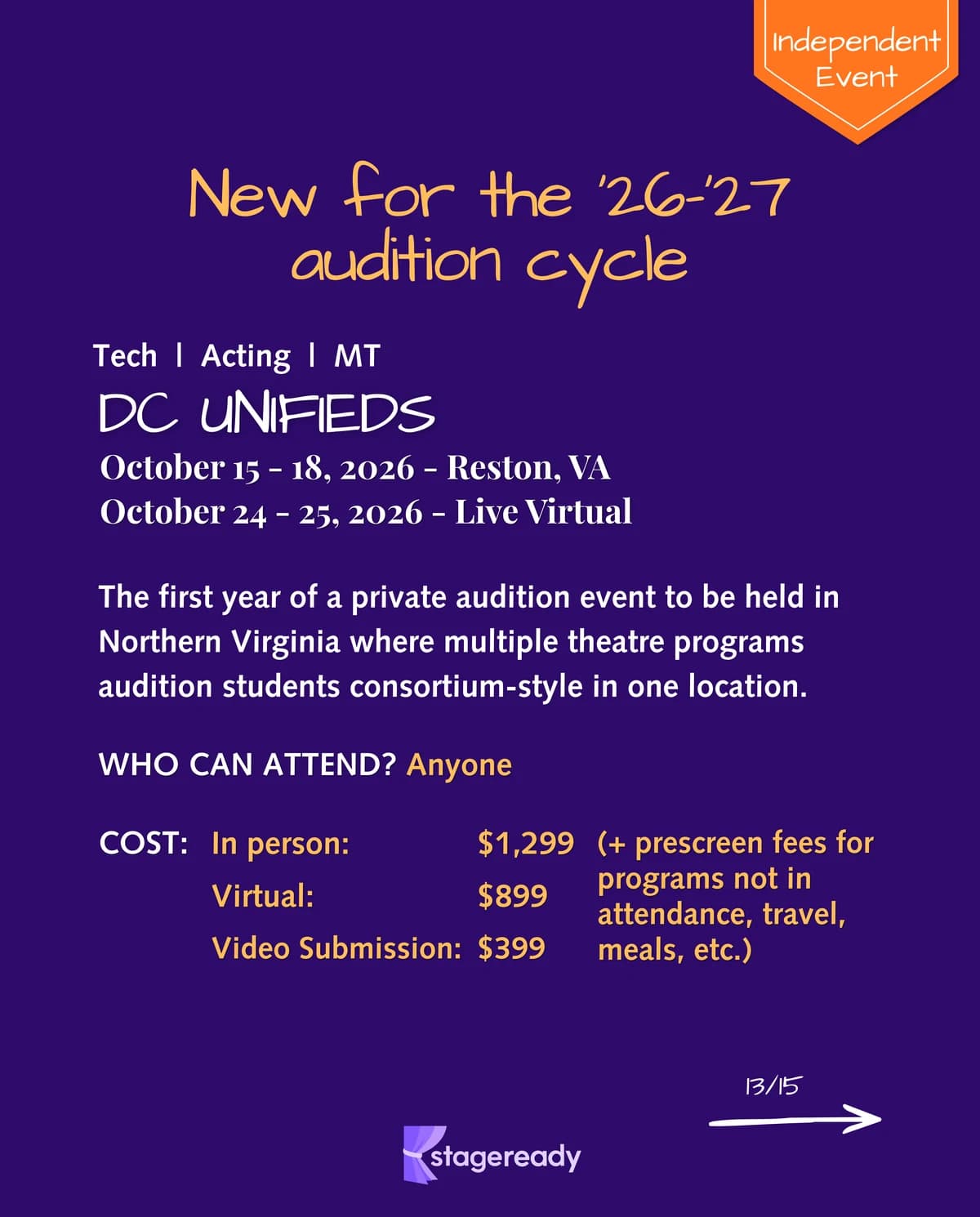
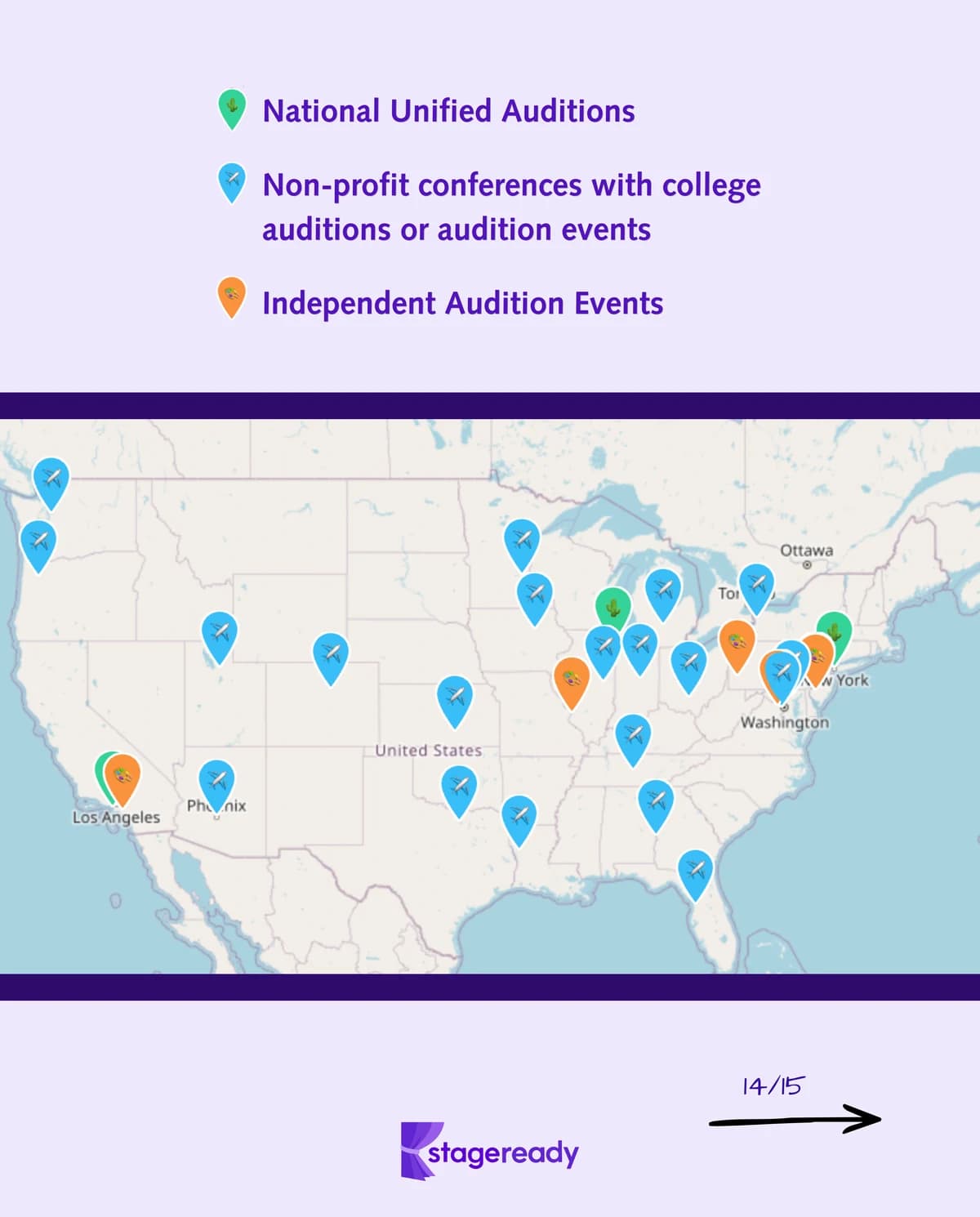
The terminology matters. In this guide, "college audition events" is the umbrella term. National Unified Auditions are the official New York, Chicago, and Los Angeles events. Some independent or regional events use "Unifieds" in their names, like Pittsburgh Unifieds, Utah Unifieds, and DC Unifieds, but they are not all run by the same organization and they do not all work the same way.
For National Unified Auditions, you do not register once for the whole event. You apply, complete prescreens when required, and schedule directly with each participating school. Many non-member schools also hold auditions in those same cities and on similar dates, so a student may combine official National Unified slots with independent school auditions and possible walk-ins.
Other events work differently. Some are independent audition events run by private organizations. Some are nonprofit or state conference events. Some are attached to coaching packages or membership requirements. Some offer consortium-style auditions where many schools see students at once, while others are a hub where students complete individual school auditions in the same city.
Why students use these events
The biggest advantage is efficiency. A well-planned event weekend can let a student audition for several programs, discover schools they had not considered, meet faculty, ask current students or monitors questions, and reduce the number of separate campus trips. For families managing school, work, flights, hotels, application portals, and prescreen decisions, that efficiency can matter.
Unified-style events can also help students get a clearer read on fit. Faculty interactions, room energy, callback instructions, and how a program communicates under pressure can all tell you something. Keep notes after each audition, because after three busy days, even the schools you loved can start blending together.
Where these events can get tricky
These events are intense. The hallways can be crowded, the schedule can be tight, and students may need to perform several times in a day. That can be exciting for one actor and exhausting for another. If you sing, dance, and act across back-to-back auditions, build in food, water, warmups, rest, and vocal recovery instead of treating the day like a sprint.
They also do not replace campus research. A hotel ballroom, convention center, or regional theatre tells you very little about dorm life, rehearsal spaces, dining, transportation, student support, or the feeling of the campus. Use college audition events to gain access and narrow the list, then use visits, virtual sessions, student conversations, and financial aid comparisons to decide whether a program actually fits.
Know which event type you are choosing
- National Unified Auditions: Best known for New York, Chicago, and Los Angeles. Scheduling is handled school by school, and there is no central event registration fee.
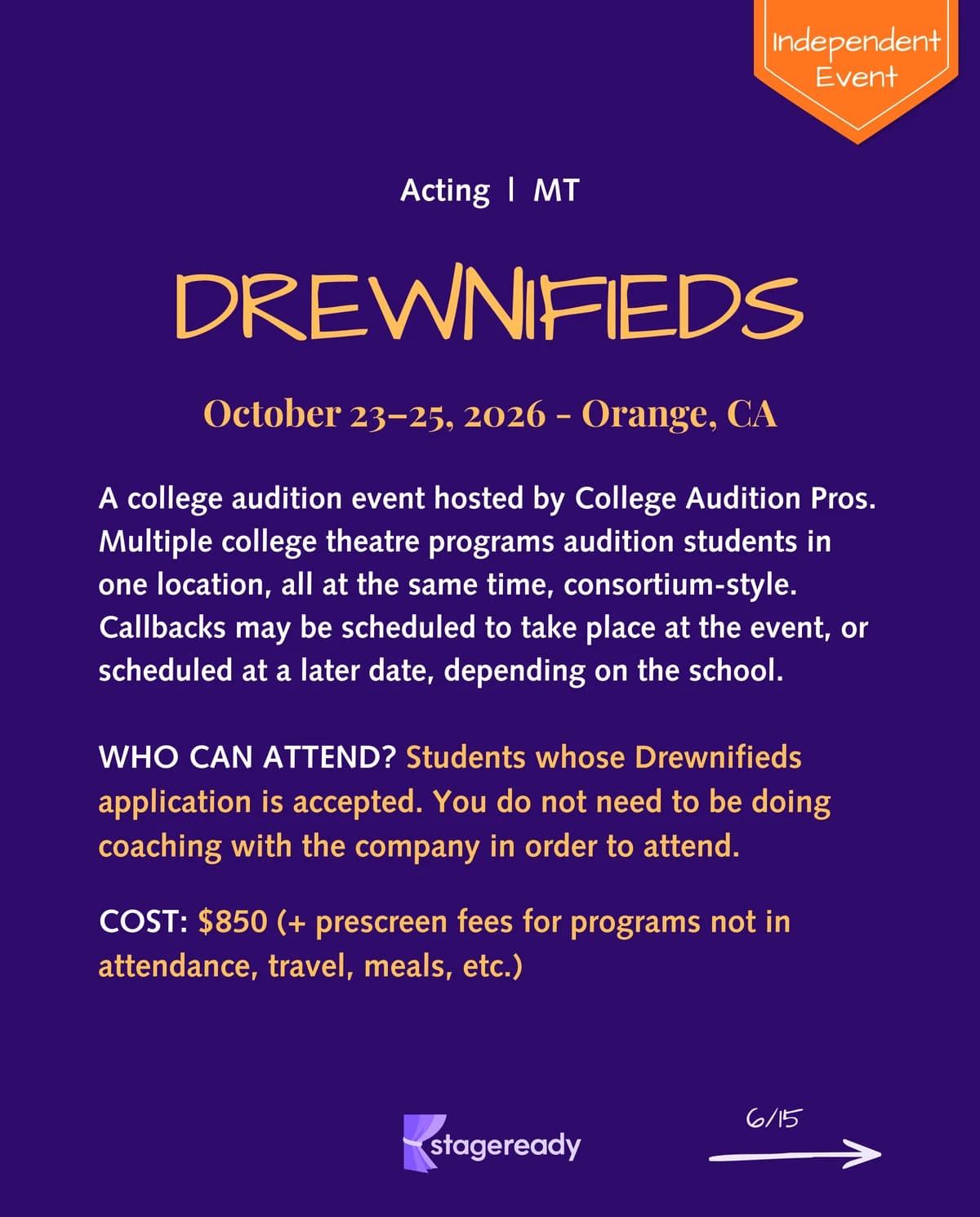
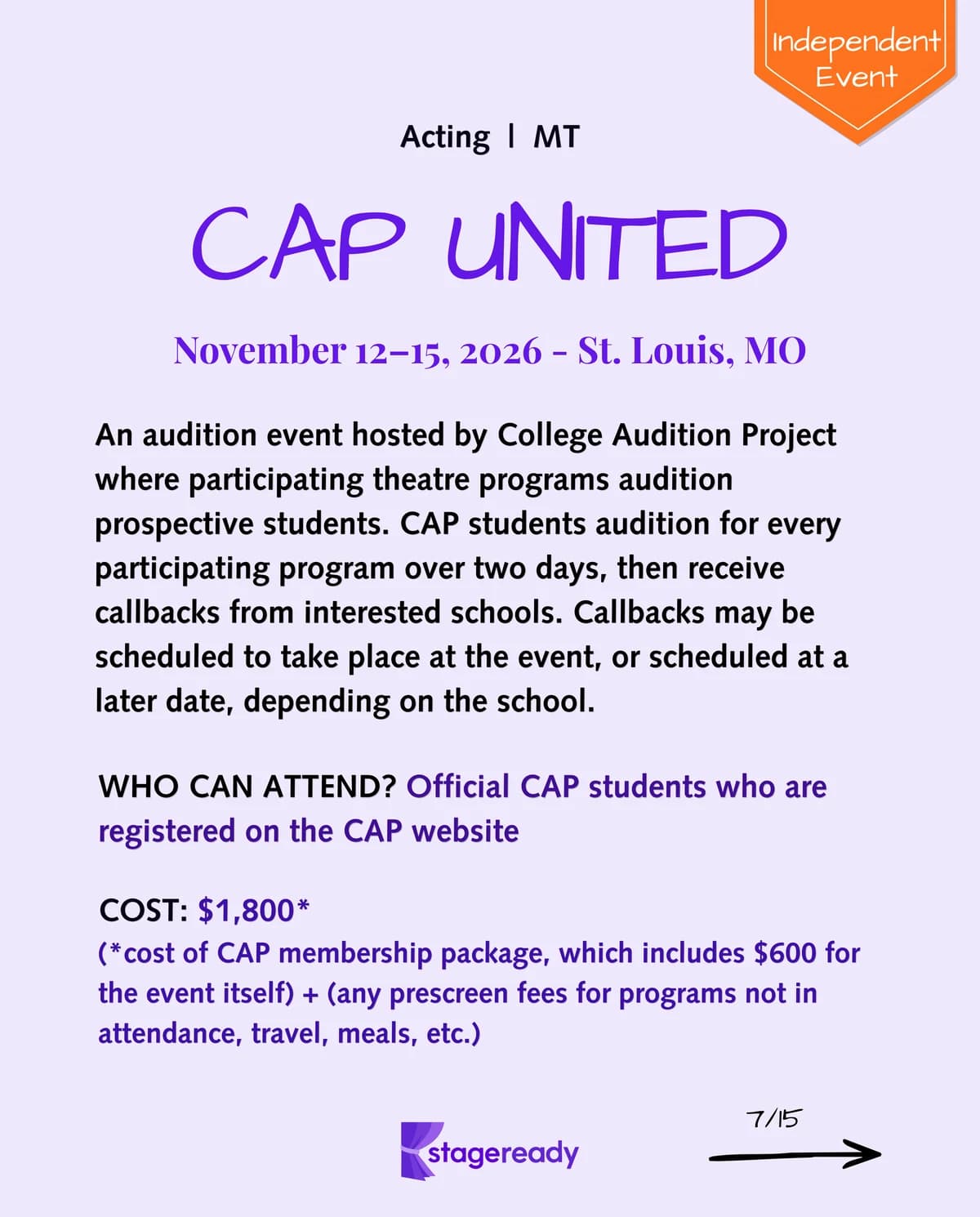
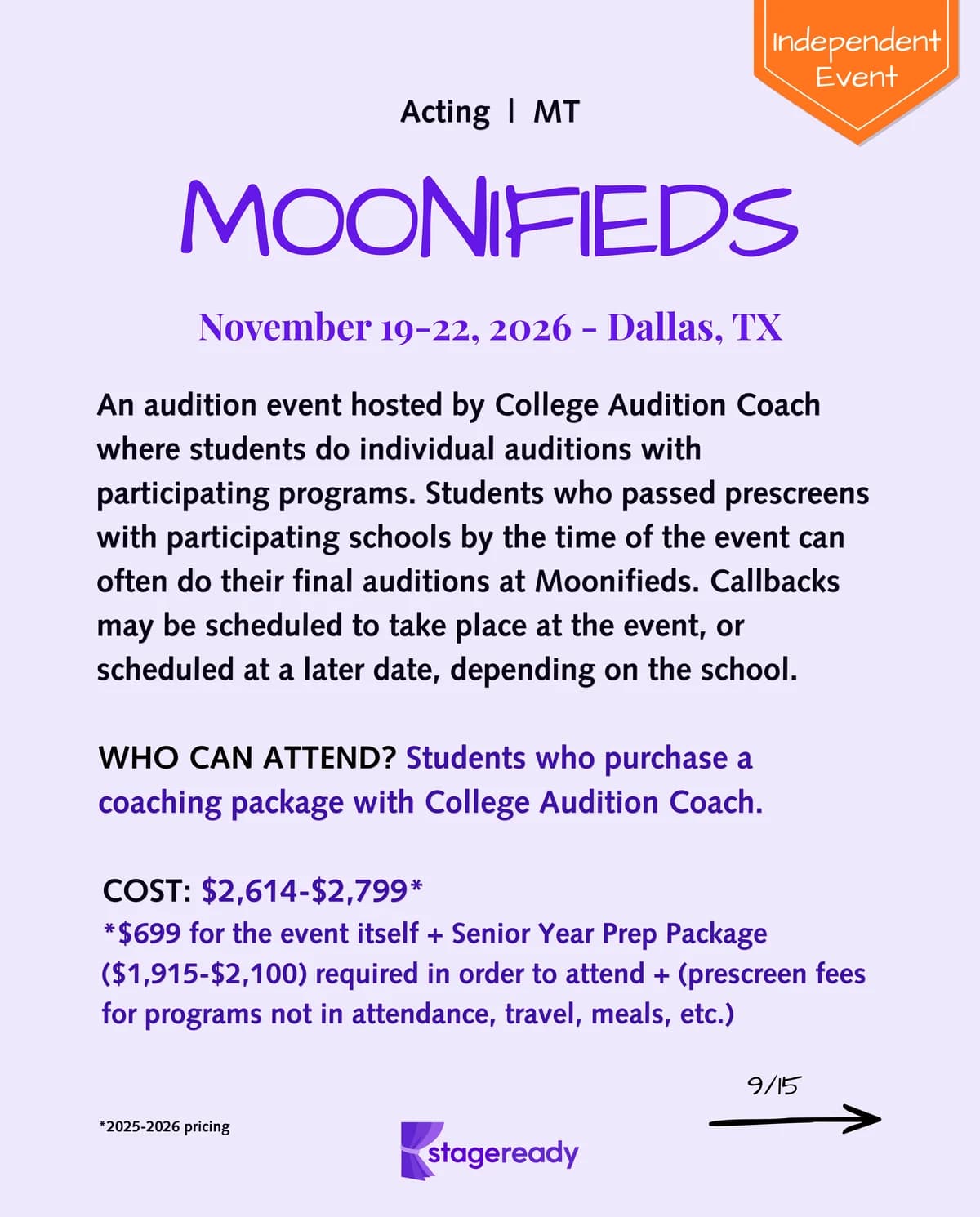
- Independent audition events: These can include events such as Pittsburgh Unifieds, Drewnifieds, Moonifieds, CAP United, and DC Unifieds. Eligibility and pricing vary widely, and some require a package or accepted event application.
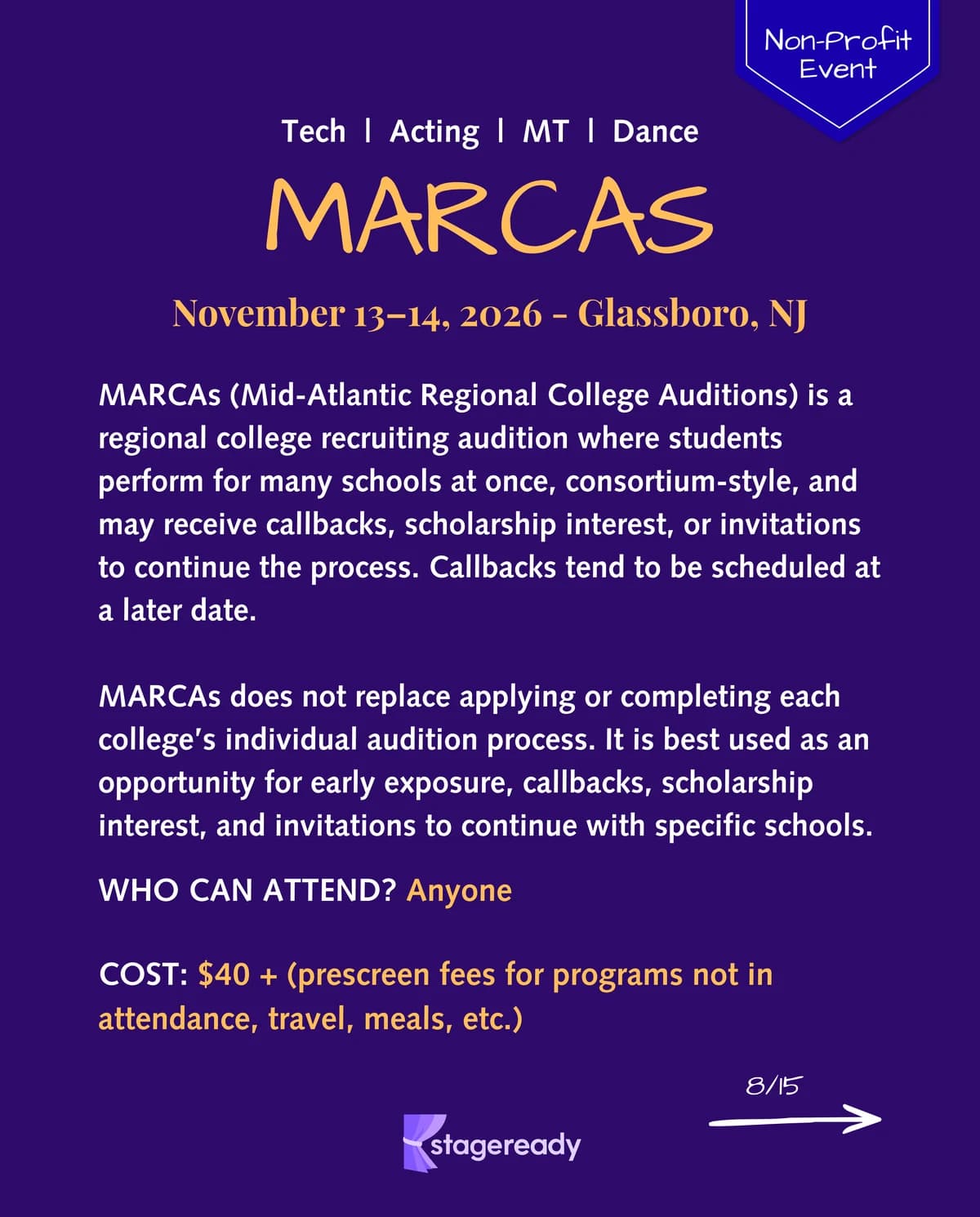
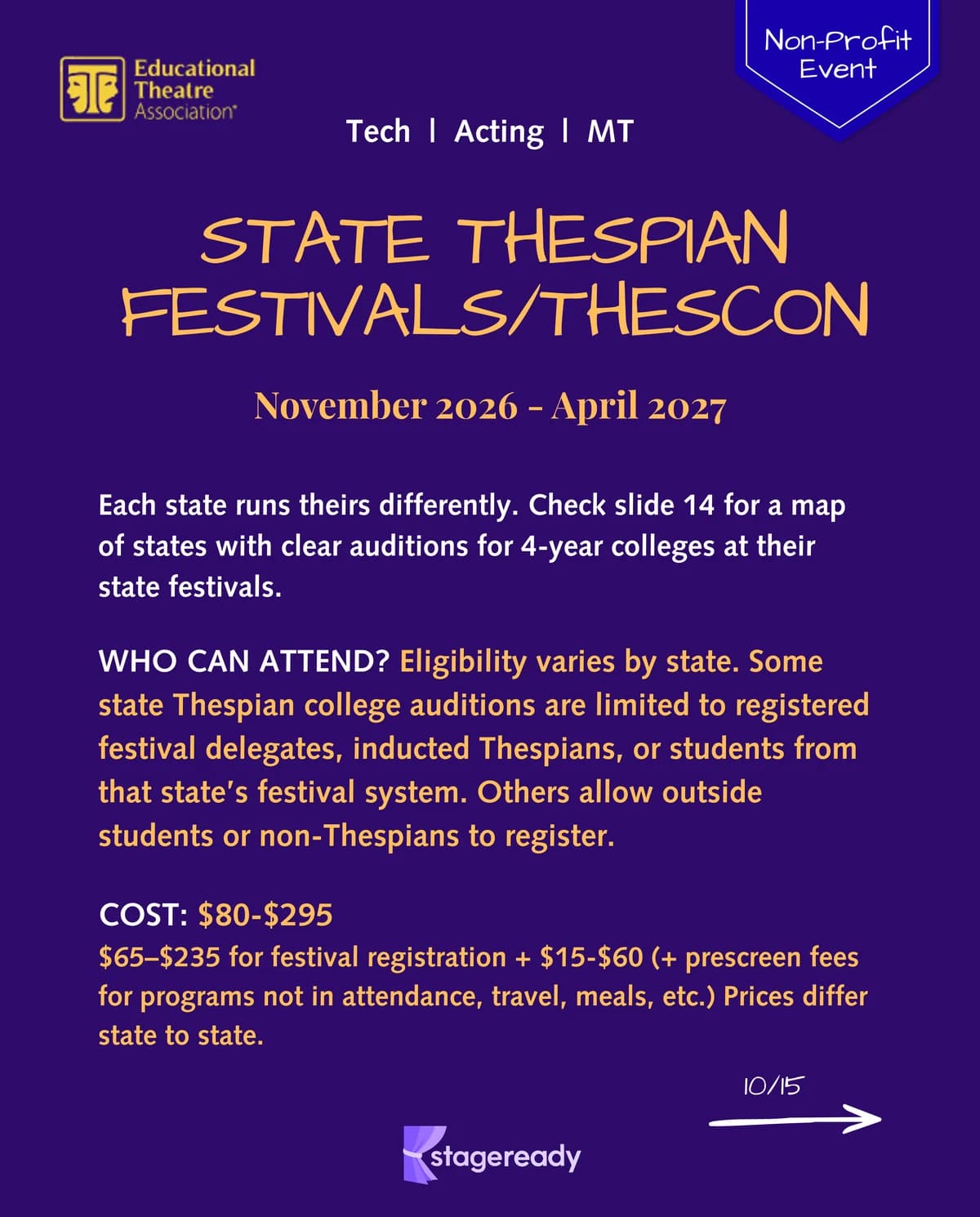
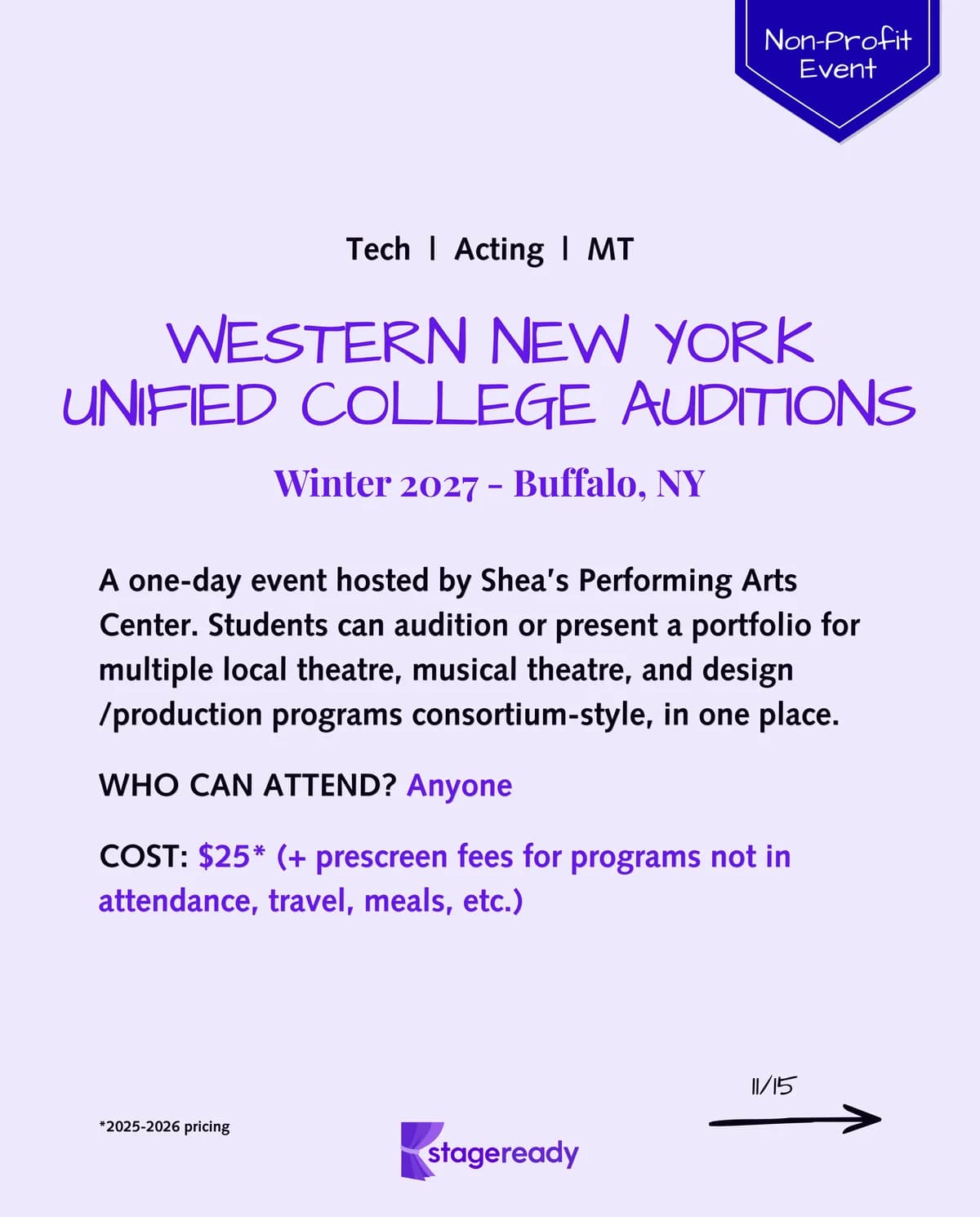
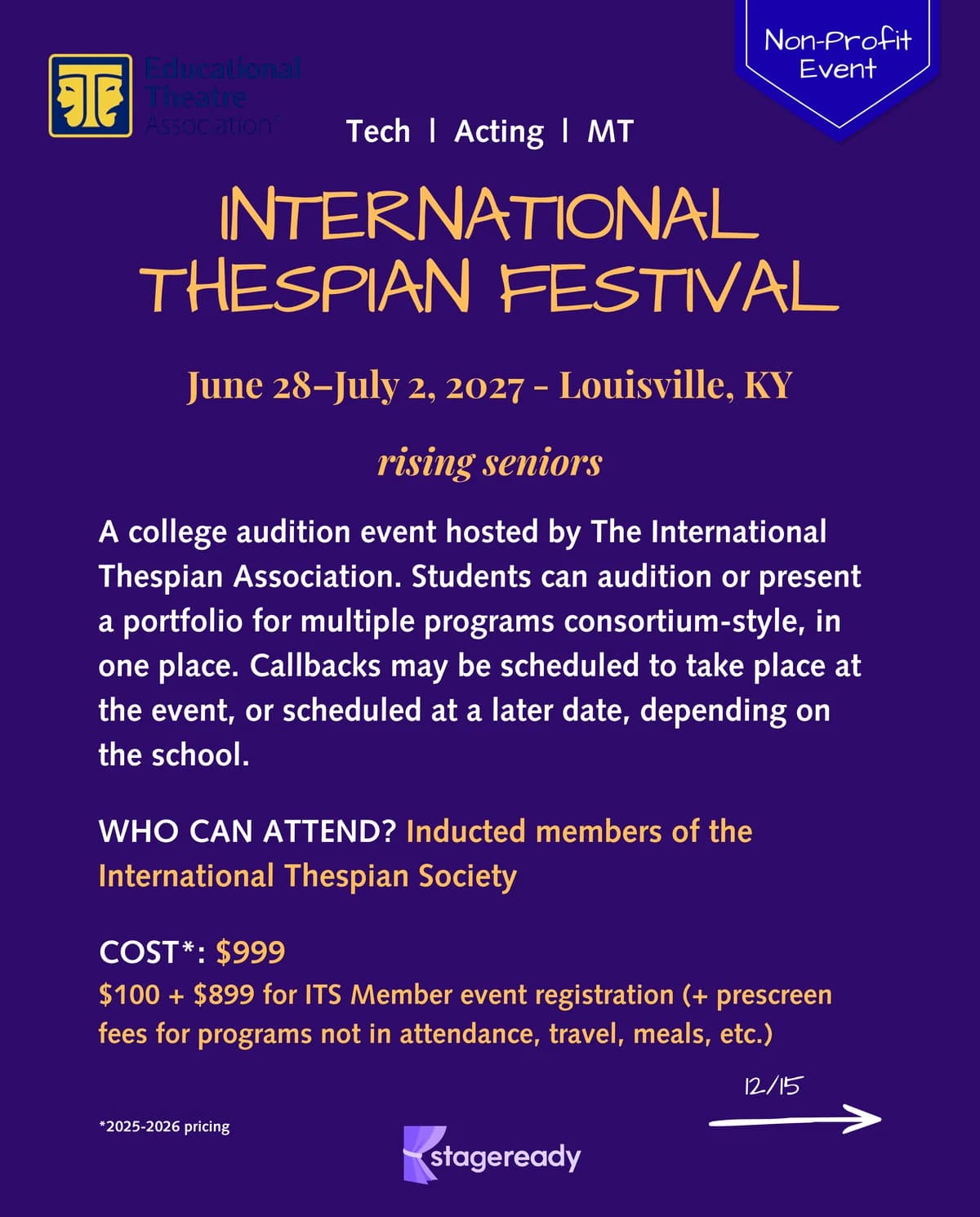
- Nonprofit and state events: These can include Utah Unifieds, MARCAs, state Thespian festivals, Western New York Unified College Auditions, and the International Thespian Festival. Some are open to anyone, while others are limited to registered delegates, inducted Thespians, or students in a state festival system.
- Virtual and video options: Some events include live virtual auditions or video submissions. These can lower travel costs, but they still require careful scheduling, tested tech, and a quiet space.
Before you pay or book travel
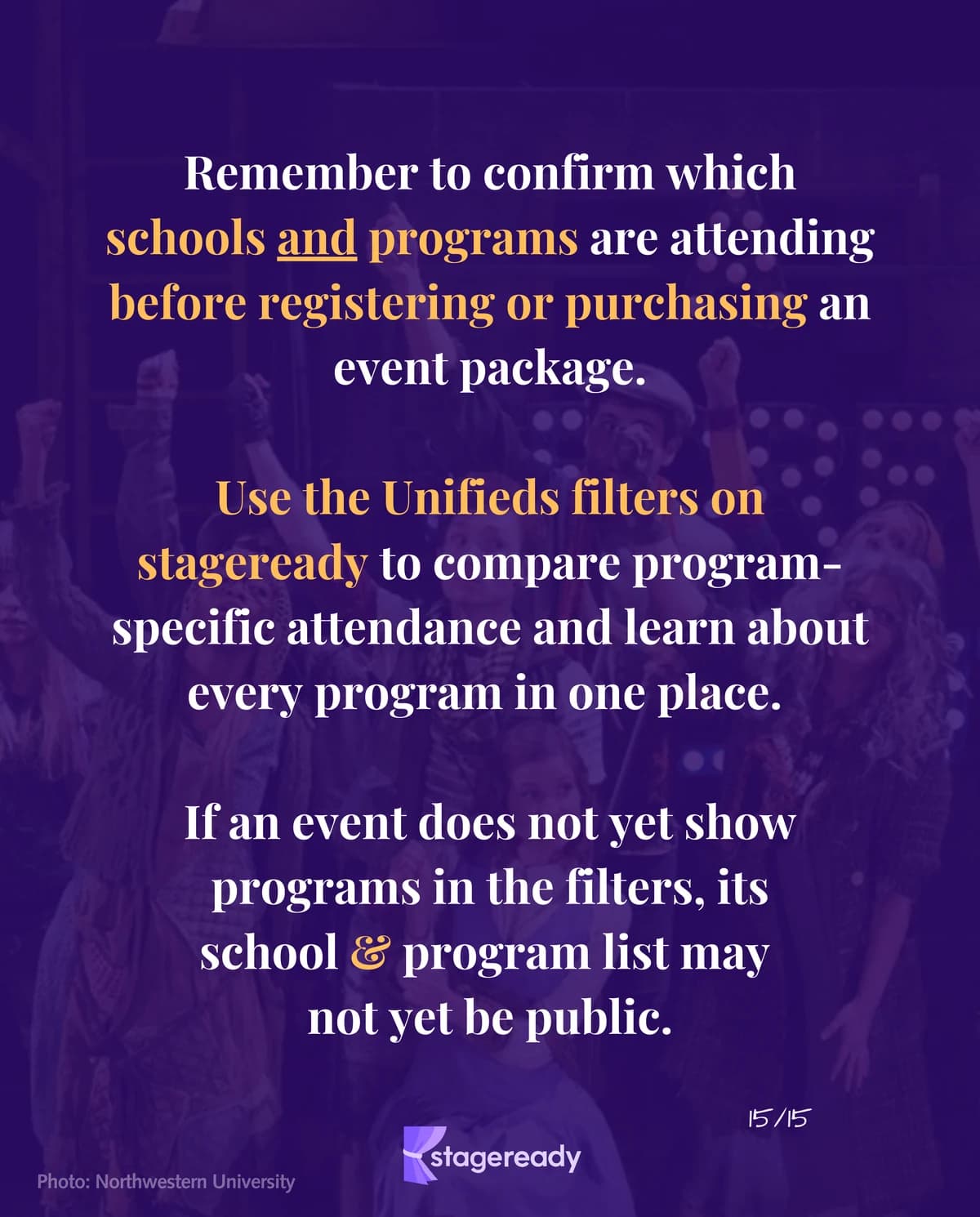
The slide deck includes dates and pricing notes for the 2026 to 2027 audition cycle, but every event can update rosters, fees, eligibility, and formats. Before paying for an event package or booking travel, confirm the school list, the specific programs attending, whether your intended major is represented, whether you need a prescreen pass first, and whether callbacks happen at the event or later.
Also check the true cost. An event with a low registration fee may still require prescreen fees, school application fees, flights, hotels, food, local transportation, coaching, and missed school or work. A paid event may still be worth it if many of your target programs attend, but the math should be honest.
How to decide if an event belongs on your list
Start with your school list, not the event calendar. If six target programs attend one event, that event may be a strong fit. If only one target program attends, it may make more sense to audition virtually or on campus. Also ask whether you perform well in a fast-paced setting. Some students thrive on the energy; others do better with fewer auditions and more recovery time.
Finally, treat every event as one part of the larger audition strategy. College audition events can save time and money, but they are not magic. The best plan is usually a balanced one: the right materials, a realistic budget, a manageable schedule, and a school list that includes academic, artistic, financial, and personal fit.
Before you register or book travel, use the college audition event filters on stageready to see which participating programs are already mapped. If an event is not listed yet, check the event site and each school directly.
Unifieds slots follow each program's prescreen calendar, so work backwards from the dates in our 2026–27 audition deadlines tracker when planning which events to attend.
Ready to find your perfect program?
Explore 10850+ performing arts programs, track audition deadlines, and organize your college search.
Get Started Free