So You Want to Be an Anime Voice Actor? Inside English Dub Careers
 stageready
In this article
- Dub Actors at a Glance
- What To Prioritize First
- Monica Rial and the Houston Actor Route
- Caitlin Glass and Brina Palencia, the North Texas Campus-to-Booth Path
- Stephanie Young and the Stage Actor in the Booth
- Yuri Lowenthal and the Liberal Arts Version of the Dream
- Crispin Freeman and the Classical Actor Advantage
- Stephanie Sheh and the LA Multi-Hyphenate Route
- Other Routes Into the Booth
- What These Routes Have In Common
- Why Geography and Booth Craft Shape the Work
- What the Booth Actually Asks of You
- A Practical Starting Plan
- Schools to Explore on stageready
A lot of people first picture anime dubbing as character voices, favorite shows, and one lucky opening. The career paths behind English dubs tend to be more layered. In the actors below, the public record often points to some combination of actor training, regional studio access, stage or screen work, and practice with the practical demands of recording to picture.
If you want to become an anime voice actor, it helps to look beyond one particular origin story. The examples below are a set of public paths worth studying: where people trained, where they worked, and which skills appear to have carried across mediums.
Dub Actors at a Glance
| Actor | Selected Anime Credits | Training Path |
|---|---|---|
| Monica Rial | Dragon Ball, My Hero Academia, Fruits Basket | University of Houston; theatre study and Houston commercial voiceover work |
| Caitlin Glass | Fullmetal Alchemist, Ouran High School Host Club, Fruits Basket ADR direction | UT Arlington (BFA Theatre Arts, 2004); stage acting and ADR direction |
| Brina Palencia | One Piece, Spice and Wolf, Fairy Tail | University of North Texas (BA Music, 2006) |
| Stephanie Young | One Piece, Fullmetal Alchemist: Brotherhood, My Hero Academia | Baylor University; theatre performance degree and campus stage work |
| Yuri Lowenthal | Naruto, Gurren Lagann, Code Geass | William & Mary; East Asian studies, Japanese, and theatre coursework |
| Crispin Freeman | Naruto, Hellsing, Demon Slayer | Williams College (BA Theatre); Columbia University (MFA Acting) |
| Stephanie Sheh | Naruto, Bleach, Sailor Moon | UCLA graduate; additional acting and voiceover training through UCLA TFT, Second City, East West Players, and Susan Blu Voiceover Workshop |
| Luci Christian | One Piece, My Hero Academia, Ouran High School Host Club | Angelo State University (BA Theatre); Louisiana State University (MFA Theatre) |
| Todd Haberkorn | Fairy Tail, Fullmetal Alchemist: Brotherhood, Ouran High School Host Club | Southern Methodist University (BFA Theatre, 2004) |
What To Prioritize First
It is easy to focus on voices before acting, however, Voice Acting Club frames voice acting as acting first. Steve Blum advises beginners to start with what their voices do naturally, record themselves, and build from honest listening instead of strain. Taken together, that advice points to a practical starting place: develop the performance before chasing a manufactured sound.
Dub sessions ask actors to react truthfully, take direction quickly, adjust timing, and keep a consistent performance across takes. Distinctive tone and range can help, but intention, listening, and repeatability are the skills that make a read usable in a booth.
Monica Rial and the Houston Actor Route
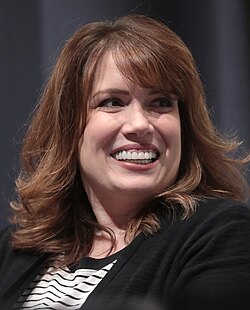
Monica Rial's official bio offers a clear example of an anime career with roots outside the booth. She started acting young, studied theater through high school and college, and attended the University of Houston, where she trained under Jose Quintero, Edward Albee, and Stuart Ostrow. She then worked in the Houston market in commercial voiceover and local film. In that account, school provided a technique base, while regional work supplied early mic experience.
Her path is a useful reminder that some dub careers begin well before a recognizable franchise role. Rial became one of the best-known English dub actors of her generation after years of acting and voiceover work were already in motion. The anime credits sit inside a broader working-actor story, not apart from it.
Caitlin Glass and Brina Palencia, the North Texas Campus-to-Booth Path

North Texas appears often in English dub biographies because training, local theatre, and studio access have overlapped there. Caitlin Glass's official site frames her as a voice and stage actor first, then a Senior Voice Director at Crunchyroll, with credits including Winry Rockbell in Fullmetal Alchemist and Haruhi in Ouran High School Host Club. UT Arlington's theatre program emphasizes acting, voice, movement, and professional ties to the Dallas-Fort Worth metroplex, which makes her path one example of a local ecosystem feeding professional voice work.
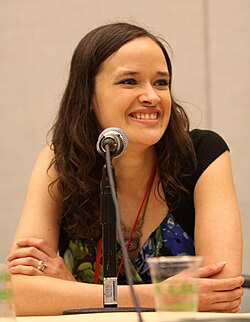
Brina Palencia shows a different North Texas variation. Her UNT background in music points to skills that can translate into dubbing: rhythm, phrasing, breath, and stamina. In performances such as Chopper in One Piece, Holo in Spice and Wolf, and Juvia in Fairy Tail, the character work is supported by vocal control and timing, in addition to their memorable sound.
Stephanie Young and the Stage Actor in the Booth
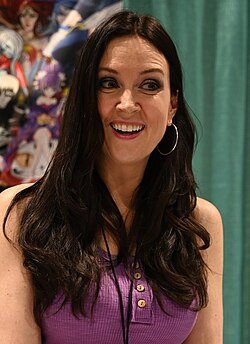
Stephanie Young's profile places anime dubbing alongside theatre rather than separate from it. Baylor's archives place Stephanie Young onstage in Baylor Theatre, and Baylor alumni pages later show Stephanie (Young) Brehm continuing professional performance work beyond campus. Her official voice site adds the anime and voiceover credits, creating a through line from stage work to recorded performance.
Roles like Nico Robin in One Piece, Olivier Armstrong in Fullmetal Alchemist: Brotherhood, and Nana Shimura in My Hero Academia show how authority, stillness, and tonal control can function in dub work. Not every memorable anime performance is built on volume. Some rely on restraint and precision.
Yuri Lowenthal and the Liberal Arts Version of the Dream
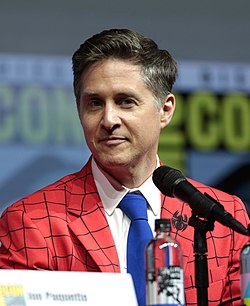
Yuri Lowenthal's William & Mary story is useful because it does not read like a neat vocational pipeline. He chose the school for gymnastics, theatre, Japanese, and in-state tuition. He studied East Asian studies, spent a year in Japan, worked through JET after graduation, and only later decided that acting was something he wanted to pursue seriously. New York theatre came next, followed by Los Angeles and voice work.
That path shows one way anime voice acting can grow out of a broad education and a gradual move toward performance. It also helps explain why Lowenthal's career spans anime, games, and animation. His public biography points less to a single industry plan than to a set of interests and skills that eventually converged.
Crispin Freeman and the Classical Actor Advantage
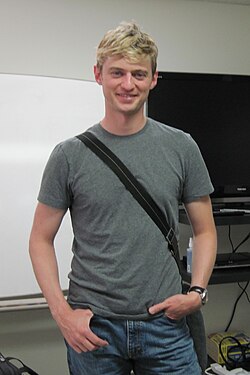
Crispin Freeman's own site says his professional voice acting career began in 1997 while he was working as a theatrical actor in New York City. He entered voice work with a stage identity already in place. Secondary biographies add the Columbia MFA context, which fits a career often associated with precision, text command, and heightened material.
For actors coming from classical or theatre-heavy training, Freeman is a useful case study rather than a universal rule. Anime often includes scale, formal language, mythic stakes, and quick tonal shifts. Training that helps an actor handle those demands can translate well when the work moves into a recording booth.
Stephanie Sheh and the LA Multi-Hyphenate Route
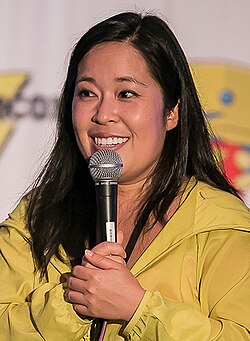
Stephanie Sheh adds an important counterweight to the Texas-heavy dub story. UCLA's alumni profile lists her as a communication studies alum working as a voice actor, automated dialogue replacement (ADR) writer, voice over director, producer, and casting director, and it points to credits like Hinata in Naruto and Orihime in Bleach. Her career shows how English dub work can sit at the intersection of acting, scripts, audience, tone, and post-production.
That makes Sheh's path useful for students who are interested in anime but are not sure whether to study theatre, media, communications, or film. The takeaway is not that one major unlocks the field. It is that transferable skills can compound, especially when the acting core stays active.
Other Routes Into the Booth
| Actor | Selected Anime Credits | Training Path |
|---|---|---|
| Colleen Clinkenbeard | One Piece, Fairy Tail, My Hero Academia | Florida State University (BFA Acting) |
| Christopher Sabat | Dragon Ball, One Piece, My Hero Academia | University of North Texas; performer, director, and producer path through Funimation and Okratron |
| Johnny Yong Bosch | Bleach, Trigun, Code Geass | No public college degree found; on-camera action work, music, and martial arts training |
| Steve Blum | Cowboy Bebop, Naruto, Digimon | No public college degree found; voiceover craft developed through working sessions, repetition, and later coaching via Blumvox Studios |
| Cherami Leigh | Fairy Tail, Sword Art Online, Sailor Moon | Collin College theatre alum; Texas theatre into anime, games, and Los Angeles screen work |
| Robbie Daymond | Jujutsu Kaisen, Sailor Moon, One-Punch Man | University of Nevada, Las Vegas (BFA Theatre Performance, MFA); earlier theatre study also reported |
| Aleks Le | Demon Slayer, Solo Leveling, Mashle | No public college degree found; self-training and digital-native practice after learning English through cartoons and games |
What These Routes Have In Common
Once you zoom out, several patterns repeat without becoming identical. Colleen Clinkenbeard's Florida State BFA Acting background and Christopher Sabat's University of North Texas connection show how trained Texas-adjacent actors became part of the production infrastructure. Johnny Yong Bosch represents a different preparation story, where screen work, music, and movement fed the booth even without a public college acting credential. Steve Blum's advice keeps the conversation grounded in process. Cherami Leigh represents a regional theatre route through Collin College, with anime becoming part of a broader working-actor life.
The newer public-facing version of the path fits here too. Robbie Daymond's UNLV theatre degrees and Aleks Le's self-training suggest that modern dub careers can be wider and more visible than earlier studio-era pathways. Across the examples, the most consistent thread is not a specific school or city. It is sustained skill-building around performance, timing, direction, and professional reliability.
Why Geography and Booth Craft Shape the Work
Geography still shapes opportunity. Texas has long had anime-dubbing infrastructure. The Houston Chronicle traces Houston's early studio pipeline and describes Texas as a continuing center for anime voice work, while the Dallas Observer shows North Texas as a dense ecosystem of dubbing studios, adjacent commercial work, and actors moving between voiceover and local stage work. That context helps explain why so many of the careers in this article connect back to Houston or Dallas, even when they later expand elsewhere.
The craft is also specific. Dubbing actors record to picture, work inside fixed timing, and still need to sound spontaneous. Familiarity with direction, session flow, engineering, and clean remote recording can make an actor easier to hire and bring back. That is one reason many durable dub careers eventually become multi-hyphenate careers.
What the Booth Actually Asks of You
All of this comes back to a practical standard. An actor needs enough training to stay connected under pressure, enough recording-to-picture practice to work inside fixed timing without flattening the emotion, and enough technical reliability for a studio to trust the audio if the work is remote. Voice Acting Club's remote guide is clear on that point: the recording space affects the sound, the audio has to be clean, and dependability starts before the session begins.
Those are learnable skills. None require a single magic voice. They require practice, feedback, and a willingness to keep improving in public and in private.
A Practical Starting Plan
| Stage | Focus | What good looks like |
|---|---|---|
| Actor training | Scene study, theatre, improv, voice and movement | You can take direction, stay connected, and make a line sound lived-in. |
| Automated dialogue replacement (ADR) practice | Record to picture and work inside fixed timing | You can compress or stretch a read without losing the emotion. |
| Demo discipline | Build material you can sustain in real sessions | Your demo reflects your usable range, not only your most extreme character sound. |
| Home setup | Dry room, clean recording chain, reliable internet, raw sample ready | A studio could hear your room and trust it for remote work. |
| Industry access | Audition, network, stay near active communities, keep showing up | You are visible, prepared, and easy to bring back when opportunities appear. |
Schools to Explore on stageready
University of Houston
University of Houston connects to the regional actor route discussed in Monica Rial's bio. Its BFA Theatre path includes acting training inside a major media market, which makes it relevant for students studying how Houston theatre and commercial work can sit near voiceover opportunities.

The University of Texas - Arlington
UT Arlington fits the DFW part of this article because Caitlin Glass trained there before building a career across acting and ADR direction. The program emphasizes acting, voice, movement, and professional ties to the Dallas-Fort Worth metroplex.

University of North Texas
UNT gives students both theatre study and voice performance options. That combination is relevant to the overlap between acting and music in Brina Palencia's public background, as well as the North Texas production context tied to Christopher Sabat.

Baylor University
Baylor's theatre performance training and campus stage culture make it useful to compare with Stephanie Young's theatre-first path. Her credits show one example of stage training carrying into anime, games, and voiceover work.
William & Mary
William & Mary reflects the liberal arts version of this topic. Its BA Theatre program sits beside language and humanities study, which makes it relevant to Yuri Lowenthal's mix of theatre, Japanese, East Asian studies, and later voice work.

Columbia University
Columbia represents the graduate acting route in this set of examples. Its MFA Theatre path offers advanced professional training, a useful point of comparison for Crispin Freeman's theatre background and later anime career.
University of California - Los Angeles
UCLA fits the Los Angeles multi-hyphenate route associated with Stephanie Sheh. Its theatre programs sit inside a major media market, which can be relevant for students interested in performance training alongside film, television, writing, directing, and voiceover ecosystems.

Louisiana State University
LSU is included because Luci Christian's path connects serious theatre training with a career that later included anime, games, and screen work. Its BA Theatre includes concentration options such as Performance and Physical Theatre for students who want broad performance study with room to focus.

Southern Methodist University
SMU offers a well-rounded BFA context for Todd Haberkorn's alumni profile. His account references learning from acting, design, lighting, and costuming, which makes the school useful for students interested in how broad theatre training can support later acting, directing, writing, and production work.
Florida State University
Florida State is included because Colleen Clinkenbeard's path adds a traditional conservatory-style acting example. Its BFA Acting program is highly selective and built around acting, voice, movement, and specialized workshops.
Free account. Track deadlines, compare programs.
The encouraging part is that anime dubbing does not appear to belong to one fixed type of actor. It is acting work under unusual conditions, and the public biographies above show several plausible ways into it. Some actors trained in theatre programs. Some came through music, communication studies, commercial markets, regional studios, online self-training, or combinations of those routes.
There is no single correct school, city, or origin story here. What connects many of these examples is continued practice, adjacent skills, and a willingness to learn how studios actually work. If you want to start mapping your own version of that route, the schools below are a strong place to begin on stageready.
Inline headshots via Wikimedia Commons: Monica Rial photo by Gage Skidmore (CC BY-SA 3.0); Caitlin Glass photo by Kevin Paul (CC BY 4.0); Brina Palencia photo by Gage Skidmore (CC BY-SA 3.0); Stephanie Young photo by Pedro Heshike for GalaxyCon / Super Festivals (CC BY 2.0); Yuri Lowenthal photo by Gage Skidmore (CC BY-SA 2.0); Crispin Freeman photo by TweetLvr (CC BY-SA 3.0); and Stephanie Sheh photo by Super Festivals / Pedro Rivera (CC BY 2.0).
Ready to find your perfect program?
Explore 10850+ performing arts programs, track audition deadlines, and organize your college search.
Get Started Free